The Poo Bus

Alexander Dennis Enviro200 body, Scania K27OUB chassis (2013): Geof Sheppard, CC BY-SA 4.0, via Wikimedia Commons
.JPG)
or the GENeco Bio-Bus #
When looking at alternative fuels in transit history, few vehicles captured public imagination, (or generated as many double-entendres) as Britain’s infamous Poo Bus.
Launched in November 2014, on a single-deck Alexander Dennis Enviro200 body built on a Scania K270UB compressed natural gas chassis, it was registered as YT13 YUK and was deployed as a working demonstration of how municipal waste could power local public transport.
How It Worked #
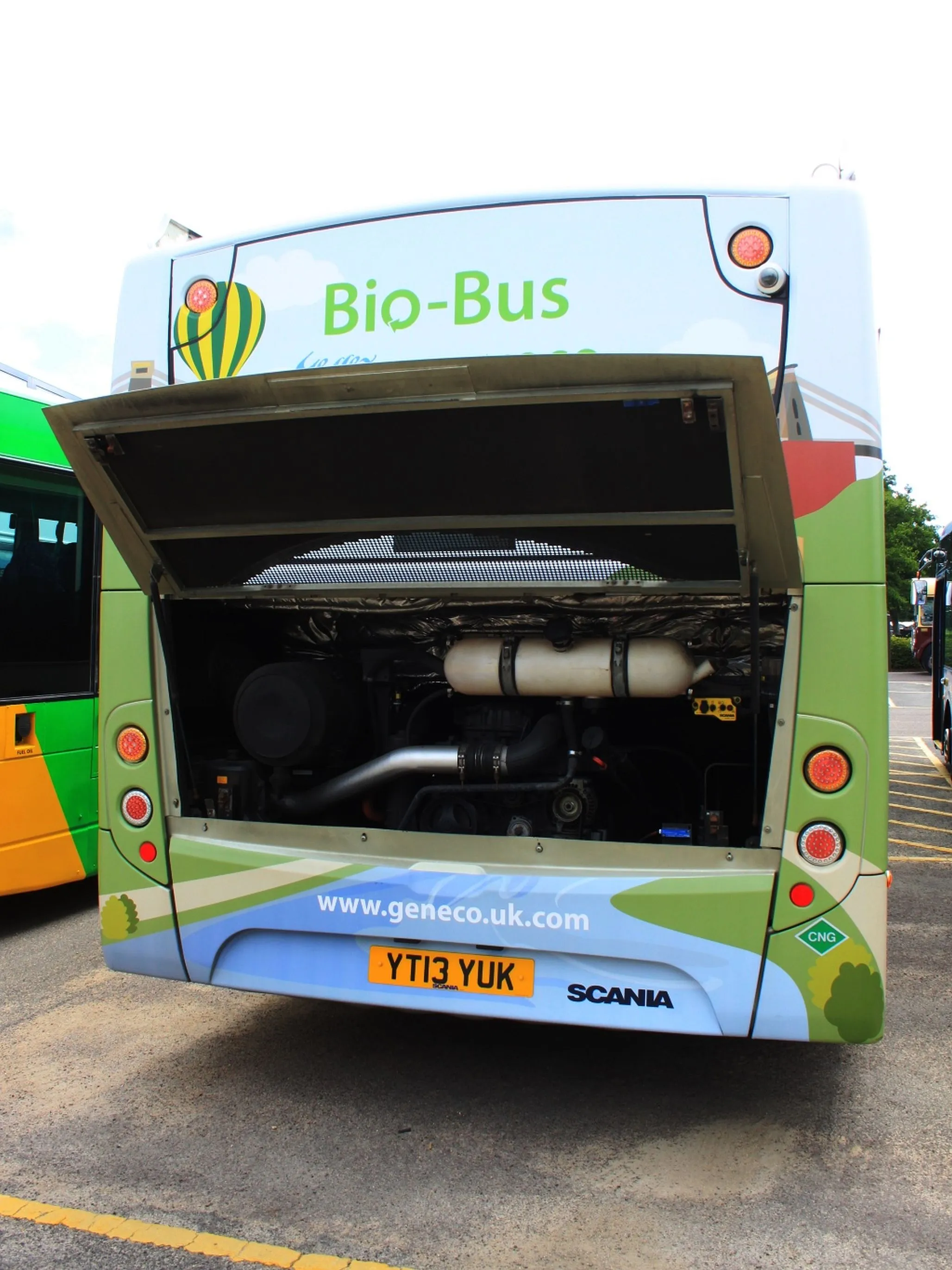
Bio Bus YT13 YUK engine compartment (2013): Geof Sheppard, CC BY-SA 4.0, via Wikimedia Commons
Click image to enlarge
_engine_compartment.JPG)
The bus ran on biomethane gas generated through the anaerobic digestion of human sewage sludge and food waste at the Bristol Sewage Treatment Works in Avonmouth.
- The Process: Sewage sludge and organic waste were broken down by bacteria in oxygen-free anaerobic digesters to produce methane. The raw gas was scrubbed to remove impurities, purified to natural-gas standards, and enriched with a small amount of propane.
- The Yield: Operators famously calculated that a single full tank of gas required the annual waste output of roughly five people.
- Range & Performance: Stored in roof-mounted dome tanks, a single fill-up allowed the 40 seat bus to travel up to 186 miles. It emitted around 30% less carbon dioxide and up to 80% fewer nitrogen oxides compared to an equivalent diesel vehicle of its era.
- The Experience: Despite passenger jokes, the refined biomethane fuel was completely odourless by the time it reached the combustion engine.
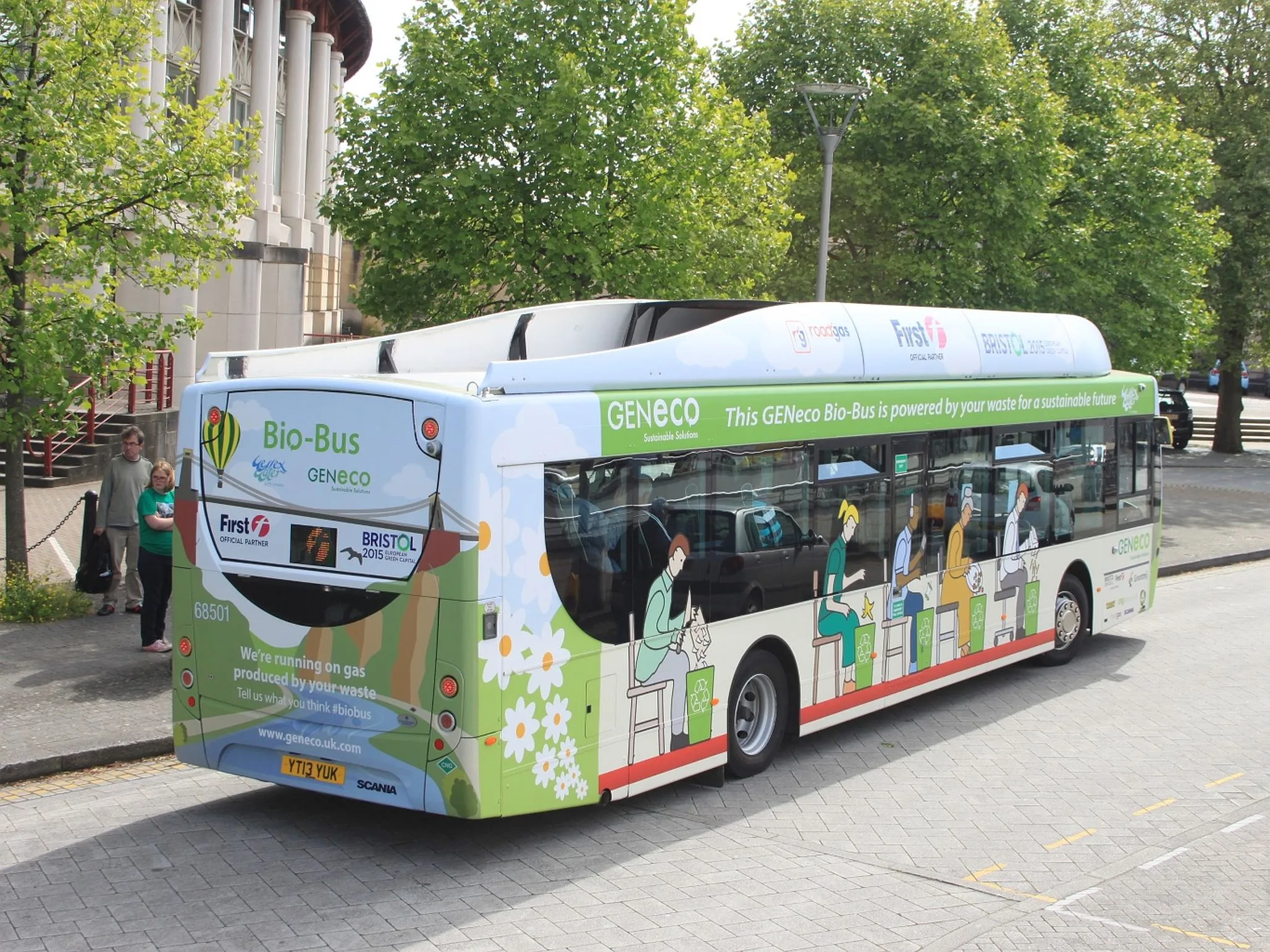
Bio Bus YT13 YUK (2013): Geof Sheppard, CC BY-SA 4.0, via Wikimedia Commons
Click image to enlarge
_rear.JPG)
Operational Reality & Legacy #
The Bio-Bus initially ran on the Bath Bus Company’s route connecting Bath city centre with Bristol Airport. In 2015, to celebrate Bristol’s year as European Green Capital, it moved to First Bristol to operate on Service 2 (Cribbs Causeway to Stockwood). Despite its success as an environmental showcase, running a single gas vehicle presented unique operational challenges:
- The bus had to make a 14 mile round trip back to the Avonmouth treatment works just to refuel, limiting its long-term feasibility as an isolated unit.
- Operating single off-spec chassis types required dedicated maintenance routines outside standard diesel garage workflows.
The vehicle was later sold to Reading Buses, where it was re-registered as BU52GAS. While single poo-powered novelty buses were eventually superseded by wider grid-injected biomethane networks and battery electric fleets, YT13 YUK remains one of the UK’s most memorable modern transit oddities.