Battle Buses

‘B’ type bus from London converted into a pigeon loft for use in Northern France and Belgium during the Great War.: See page for author, Public domain, via Wikimedia Commons

London’s Battle Buses: the ‘B’ type #
The very first ‘B’ type bus began carrying fare-paying passengers on London streets in 1911 for the the London General Omnibus Company (LGOC). They were an instant hit for their mechanical reliability, and by 1914, over 2,500 of them had been built, effectively wiping out London’s horse-drawn buses.
Within days of Britain declaring war in August 1914, the War Department began actively requisitioning civilian motor transport, completely halting commercial bus production in the capital. By October of that year, the military had commandeered over 1,000 London General Omnibus Company double-deckers, 33% of London’s entire bus fleet.
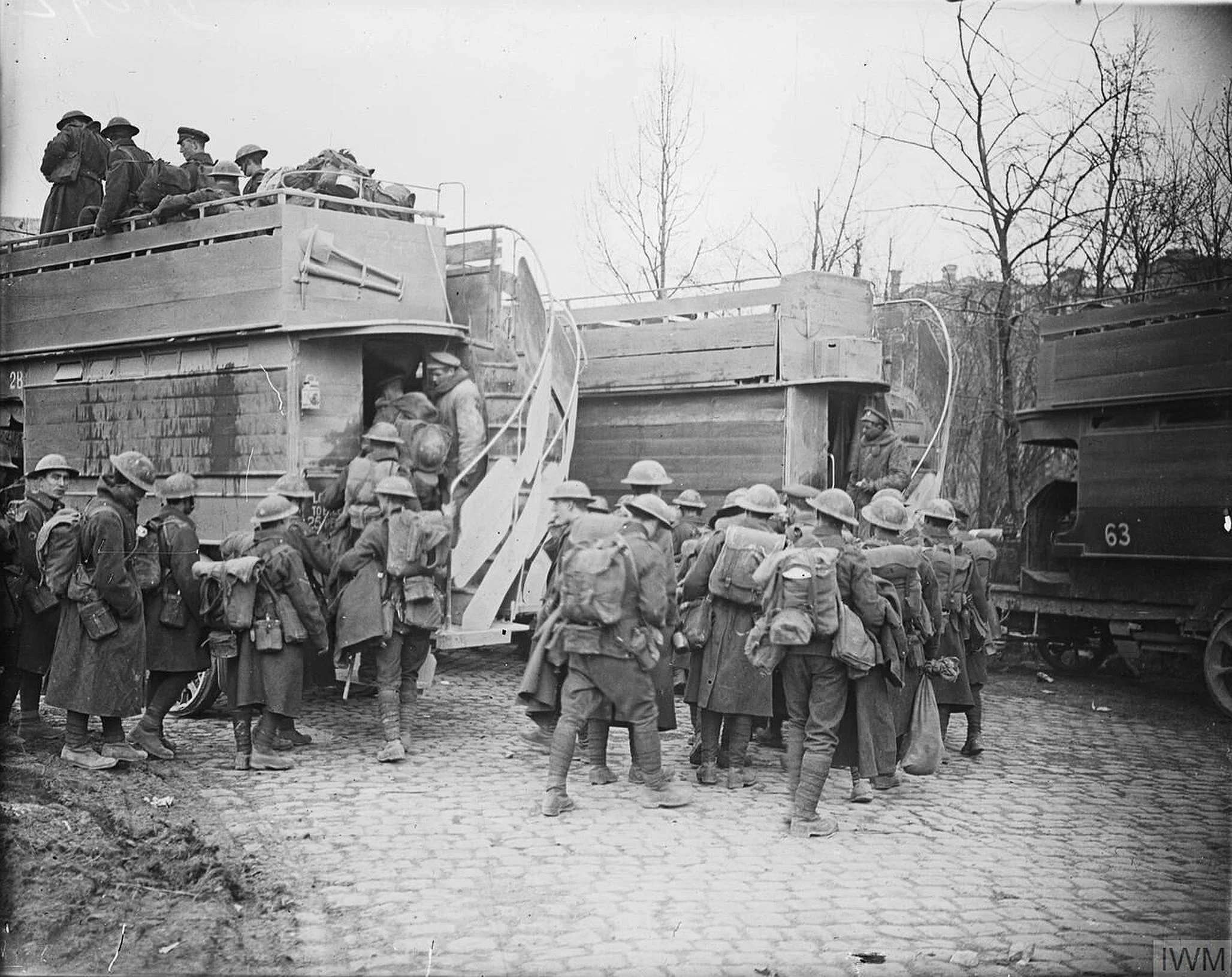
Troops embussing in Arras to go back for a rest having taken part in the Battle of Arras.: John Warwick Brooke, Public domain, via Wikimedia Commons
Click image to enlarge

Troops embussing in Arras to go back for a rest having taken part in the Battle of Arras. The buses being used are London ‘B’ type buses, some 1,300 of which were requisitioned by the army in October 1914 as troop-carriers on the Western Front. Taken in May 1917. John Warwick Brooke
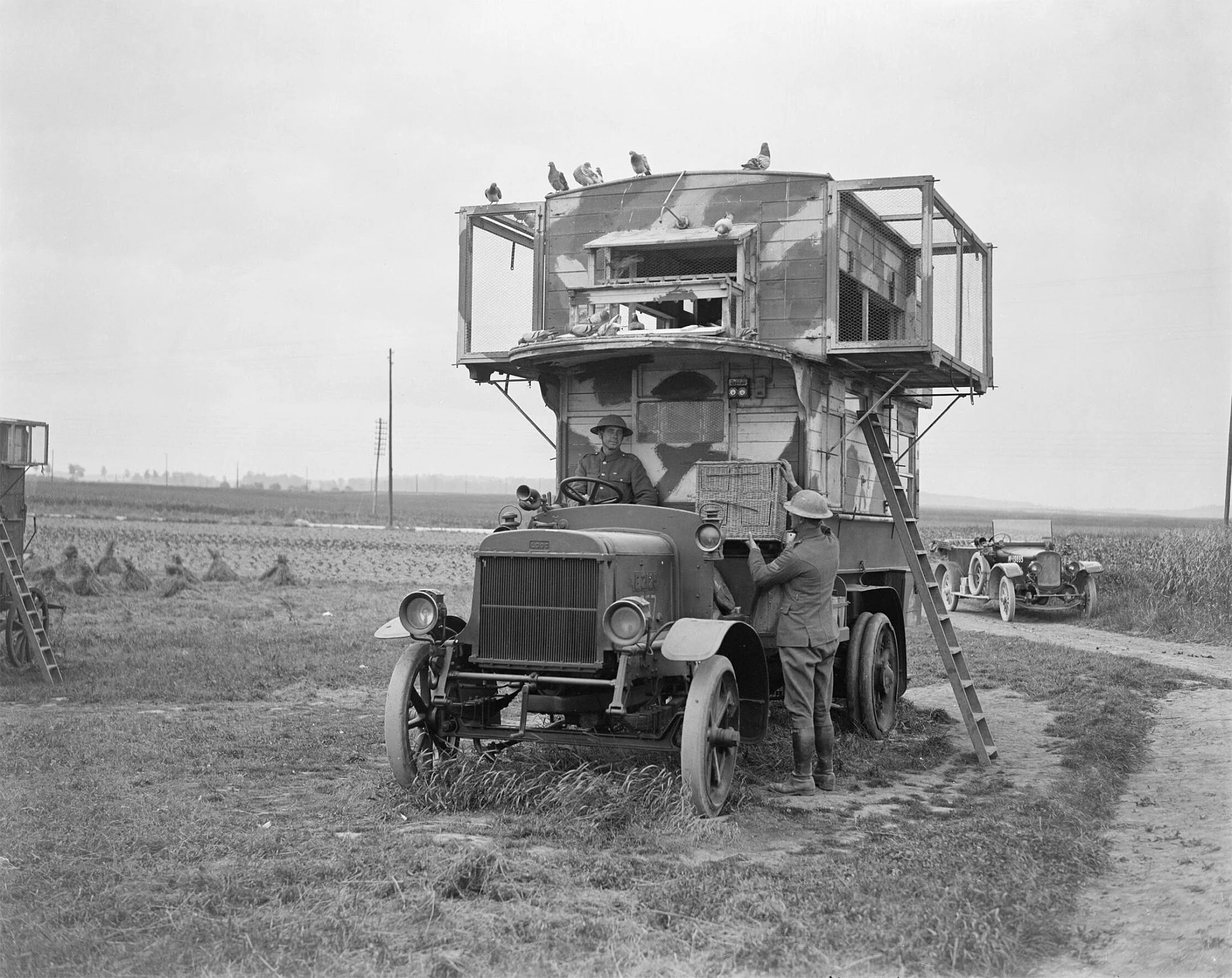
The Royal Engineers Signals Service on the Western Front, 1914-1918: McLellan, David (Second Lieutenant) (Photographer), Public domain, via Wikimedia Commons
Click image to enlarge

A former London double-decker bus (B.2125), camouflage painted, used as a travelling loft for carrier-pigeons. Pernes, 26 June 1918. Note the four-compartment wicker basket in which the pigeons were carried up the line. McLellan, David (Second Lieutenant) (Photographer)
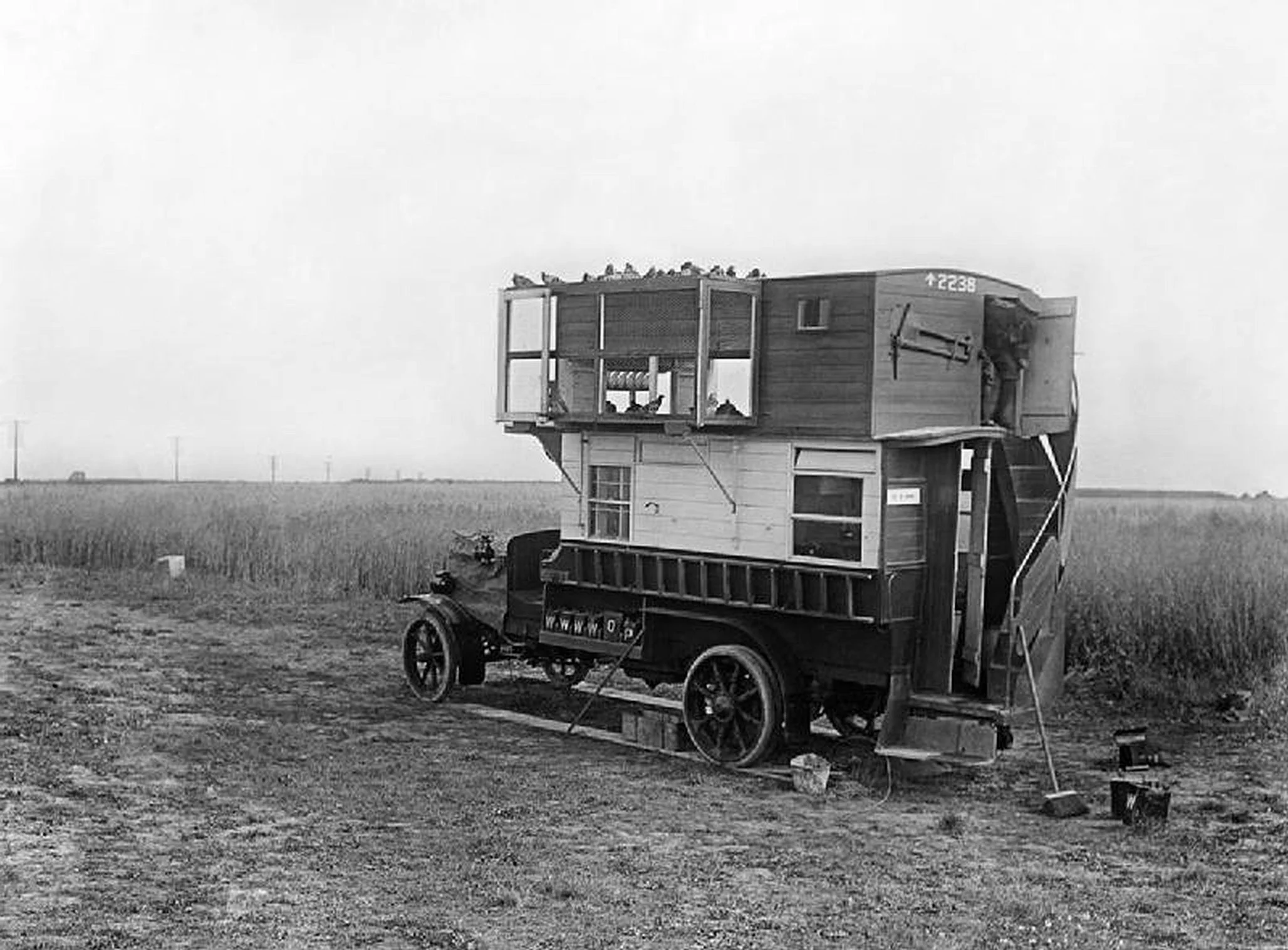
Carrier pigeons: A bus converted into a mobile pigeon loft on the Western Front (1916): John Warwick Brooke, Public domain, via Wikimedia Commons
Click image to enlarge

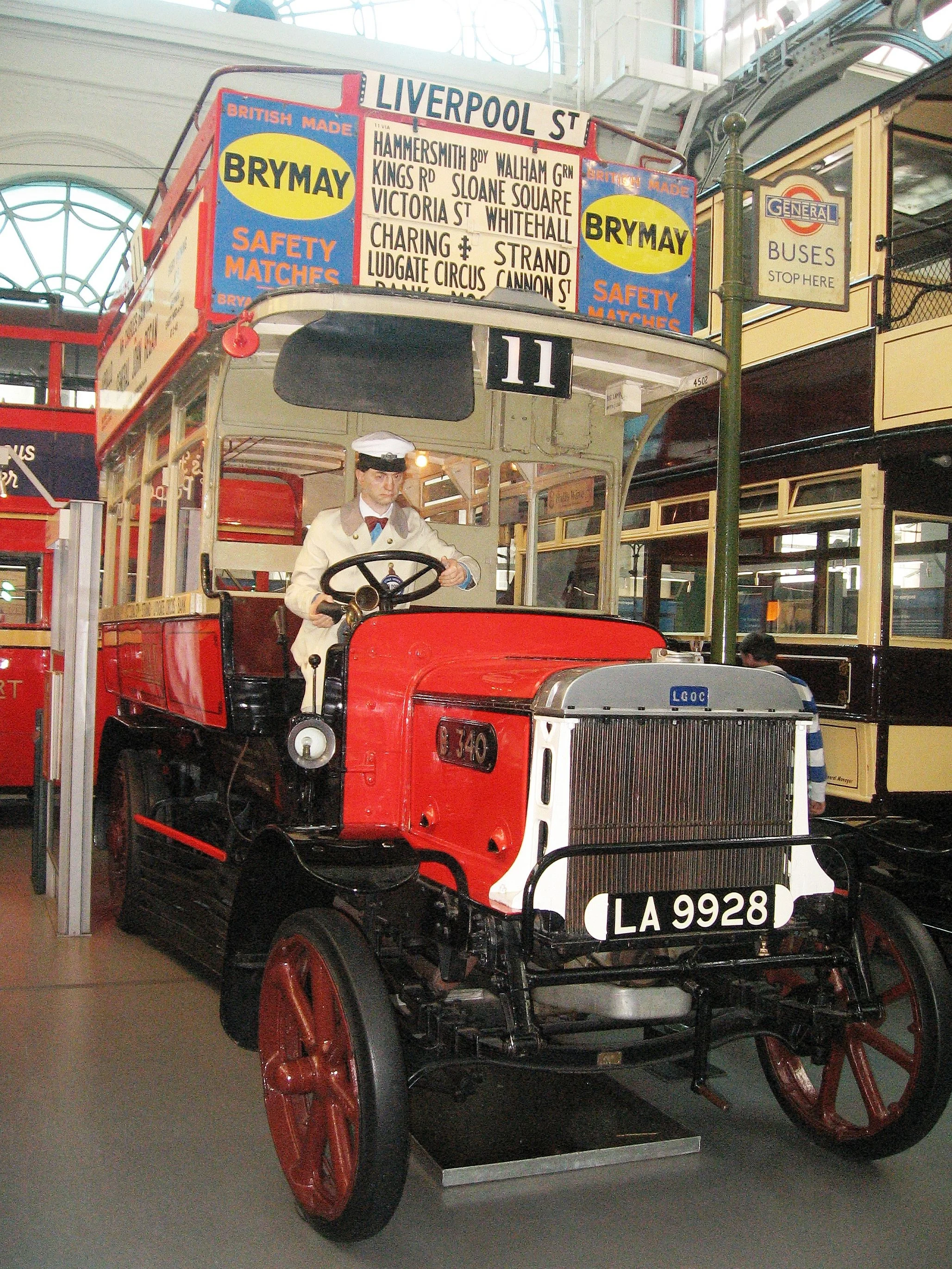
‘B’ type bus B340 London Transport Museum: Timitrius from Great Britain, CC BY-SA 2.0, via Wikimedia Commons
Click image to enlarge

- Video by: @CitytransportInfoplus
A Heavy Toll #
When the guns finally fell silent in 1918, the process of counting the cost began. Of the 1,300 London ‘B’ type buses that had swapped the smooth streets of the capital for the cratered tracks of the Western Front, only about 25% made it back to Britain. Others had been cannibalised for parts, worn to iron filings, or left behind as skeletal remains in French fields.
The buses fared better than the animals; of the hundreds of thousands of horses sent to face the mud and shellfire, only 10% made it back to Britain. More importantly, roughly 88% of all British service personnel survived the conflict, some with severe wounds. The frontline infantrymen these buses carried left behind hundreds of thousands of comrades in the soil of Flanders and Arras.
