Hugo Static Websites
Hugo: Fastest Framework for Building Websites #
Written in Go, optimized for speed and designed for flexibility. With its advanced templating system and fast asset pipelines, Hugo renders a large site in seconds, often less. - website
What could be easier? Create a blog or website post in Markdown and Hugo will convert it into HTML pages ready to upload to your server. I really enjoy creating posts this way. Ideal for simple websites with no complicated interactions, just an easy system to show off photographs and stories.
Static Websites vs Dynamic Websites #
A static website delivers pre-built pages that are ready to read the moment a visitor arrives. Because the server doesn’t have to assemble anything on the fly, pages load instantly and there is virtually no behind-the-scenes machinery to maintain or hack.
A dynamic website, by contrast, builds each page on demand every time someone clicks a link. It pulls live data out of a database to construct a customised view for that specific visitor, which is essential for online stores or social media networks. This type of website is more complex.
Markdown #
Markdown was created in 2004 by John Gruber. it is a lightweight markup language that lets users add style elements such as bold, lists just by using keyboard symbols like ### and ***.
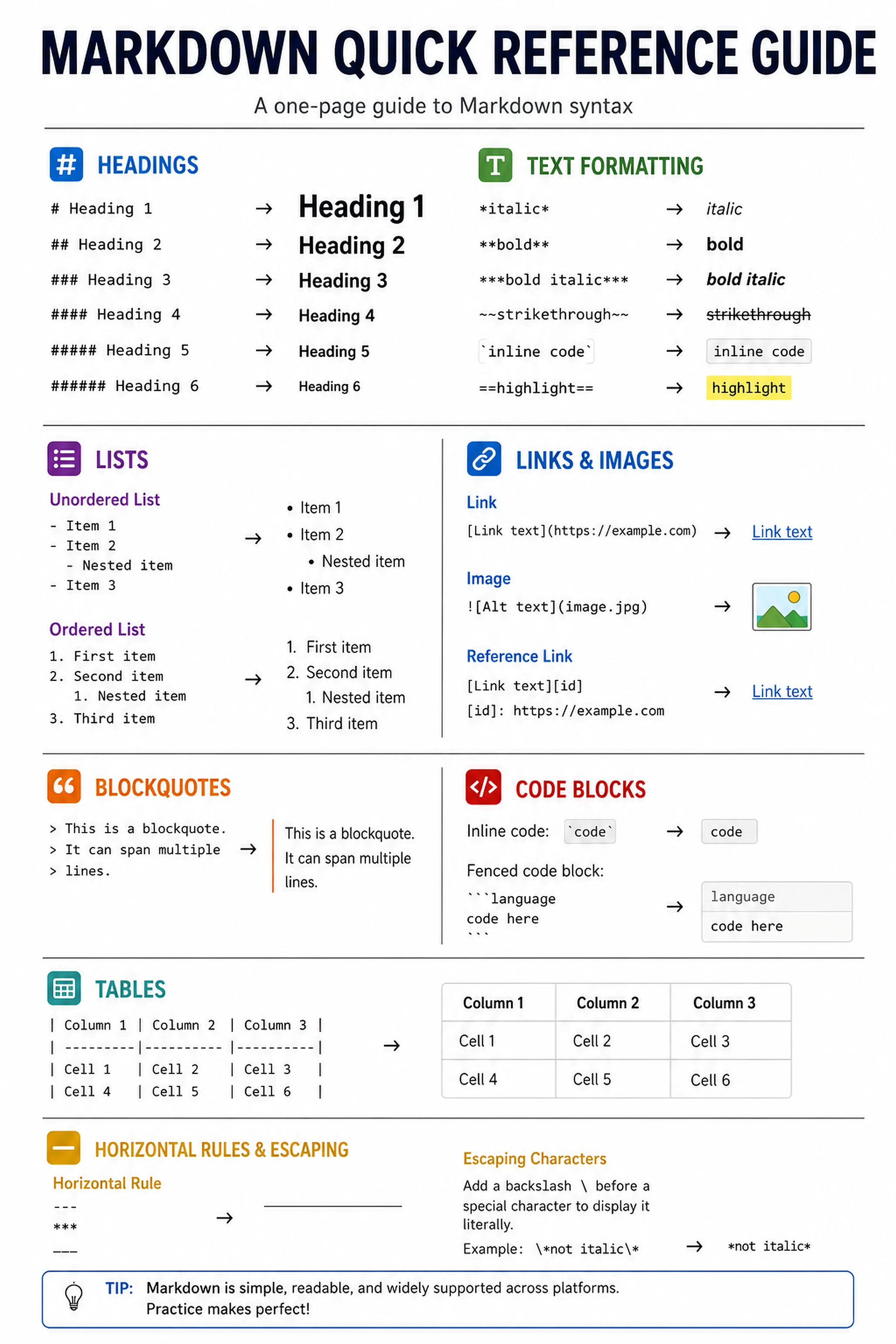
Markdown Quick Reference Guide. Click image to enlarge
Hugo and Visual Studio Code #
VS Code is an excellent editor for all sorts of programming languages and works really well with Hugo. Here is an example below of a smaller post which Hugo will convert into HTML. Note that as with all websites, a custom.css file is used for background colours, text size, etc.
Example Post #
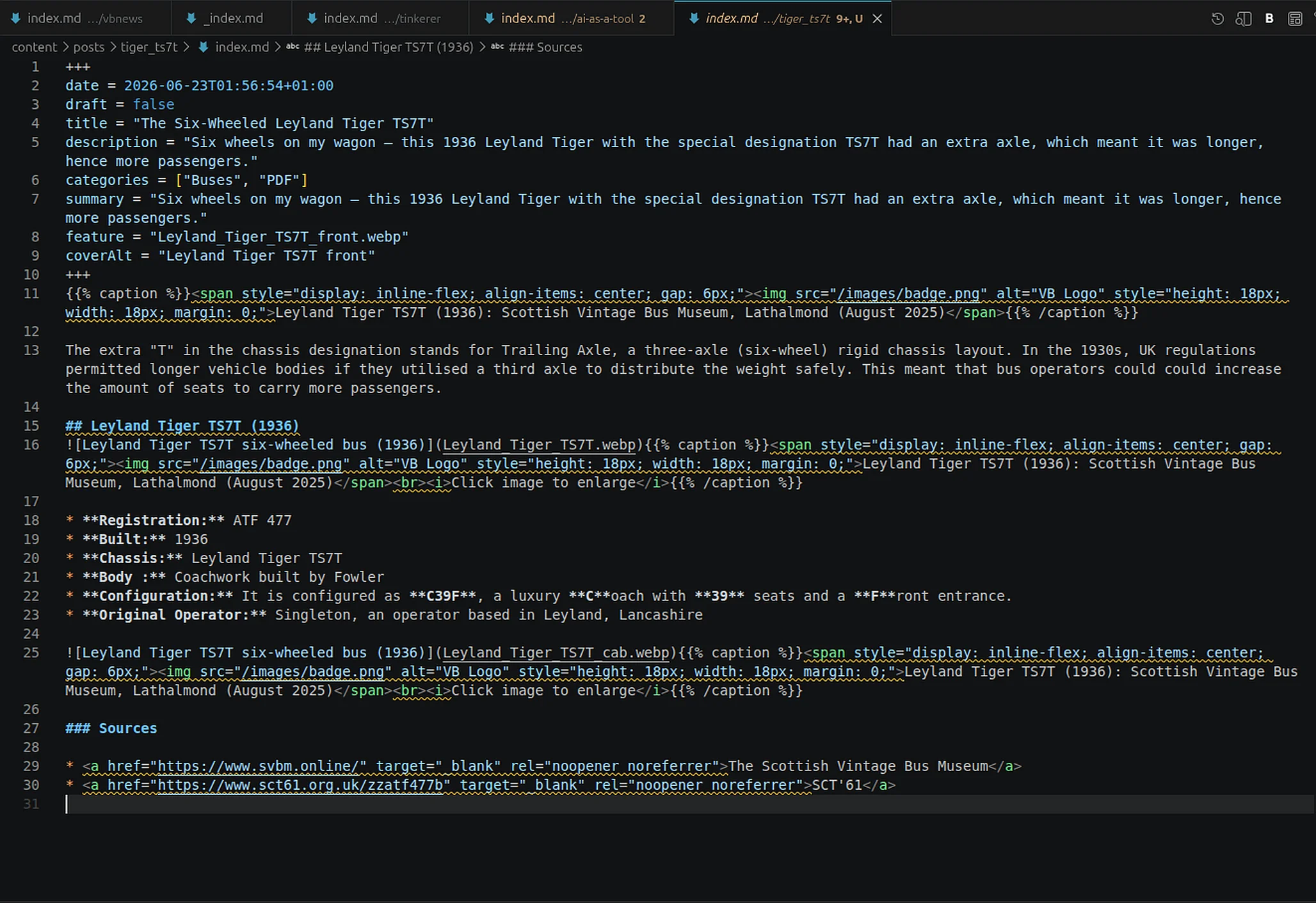
Visual Studio Code opened to show a Hugo Markdown post. Click image to enlarge
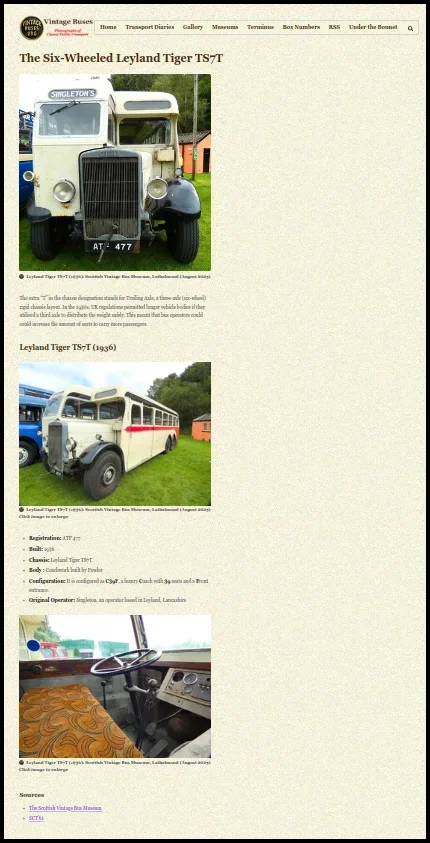
This is how the post above is rendered on a PC monitor