Ribble Motor Services

Those red and cream buses became a familiar sight rolling through cobbled town centres, seaside promenades and winding country lanes. I only ever saw a Ribble bus in service once. When I was seven I traveled with my family from Glasgow to Morecambe in 1959 and stood gaping in amazement at my first ever view of a rear-engined double decker bus.
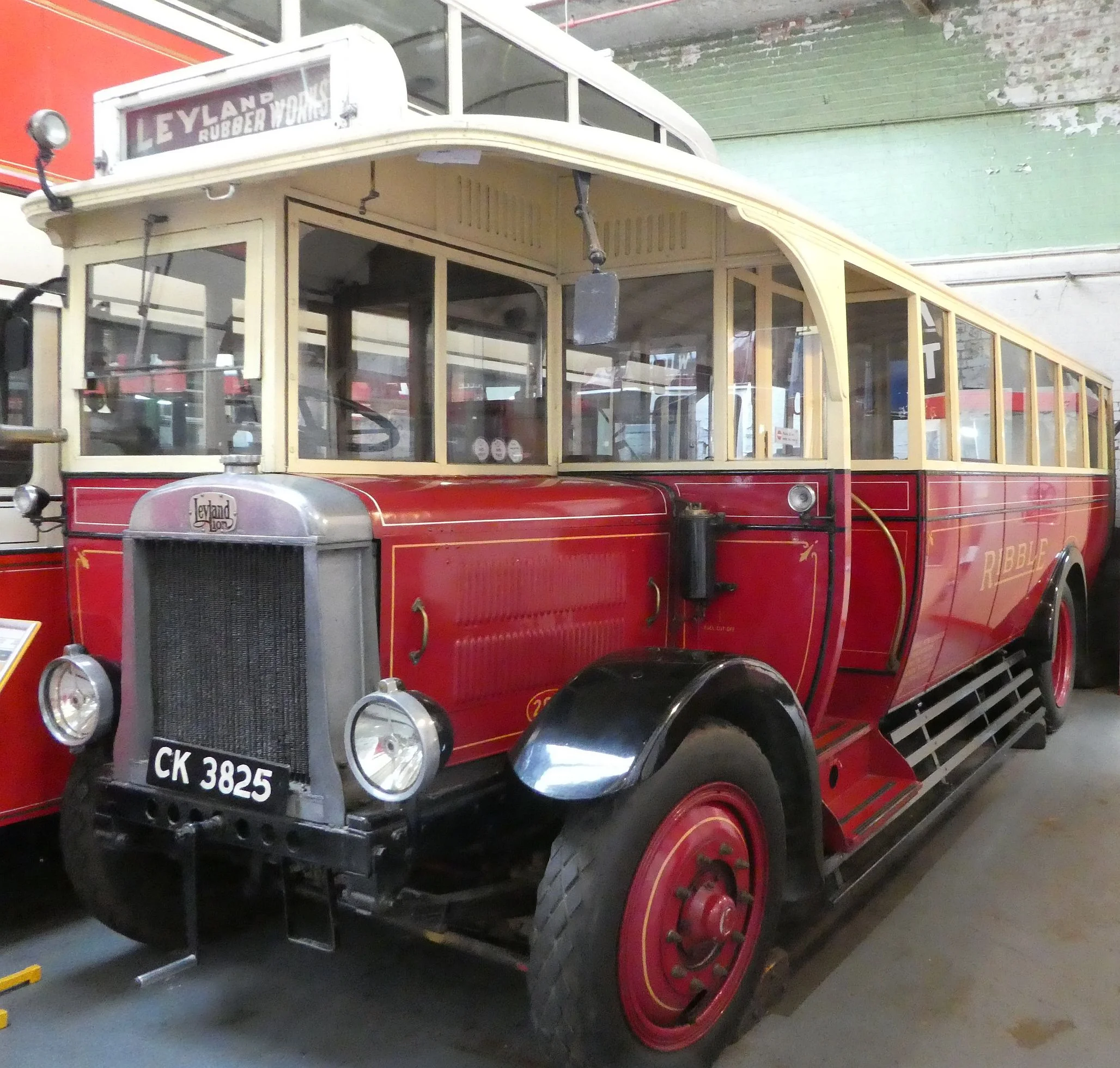
 Leyland Lion PLSC1 (1927). Replica body built by Leyland (1981): Museum of Transport Greater Manchester
Click image to enlarge
Ribble Motor Services History #
- 1919: Founded in Preston, Lancs. The original livery was a dark red base with cream lining.
- 1920s to 1930s: Ribble grew rapidly via acquisition of many local operators across Lancashire and Cumbria. The red and cream livery became well established.
- 1940s to 1950s: Introduced express coach double-deckers known as the White Ladies. Coaches carried a cream/red livery. Local buses stayed red/cream.
- 1960: Focus on express routes, motorway services; larger coaches and double-decker express buses used. Types of buses included Leyland Atlanteans and Leopards.
- 1969: Ribble became part of NBC (National Bus Company). Fleet & branding moved toward standardisation.
- 1970s to early 1980s: Modernisation of fleet which included large numbers of Leyland Nationals, Atlanteans, Leopards, etc. The livery continued as red/cream but simplified in styling.
- 1986: Deregulation triggered major structural changes,depots transferred, Ribble brand identity reduced and the classic red/cream scheme gradually replaced.
- 1990s to present day: Ribble Vehicle Preservation Trust preserves key vehicles and maintains the heritage. The historic liveries of red/cream and cream/red can still be seen at events.
1951 #
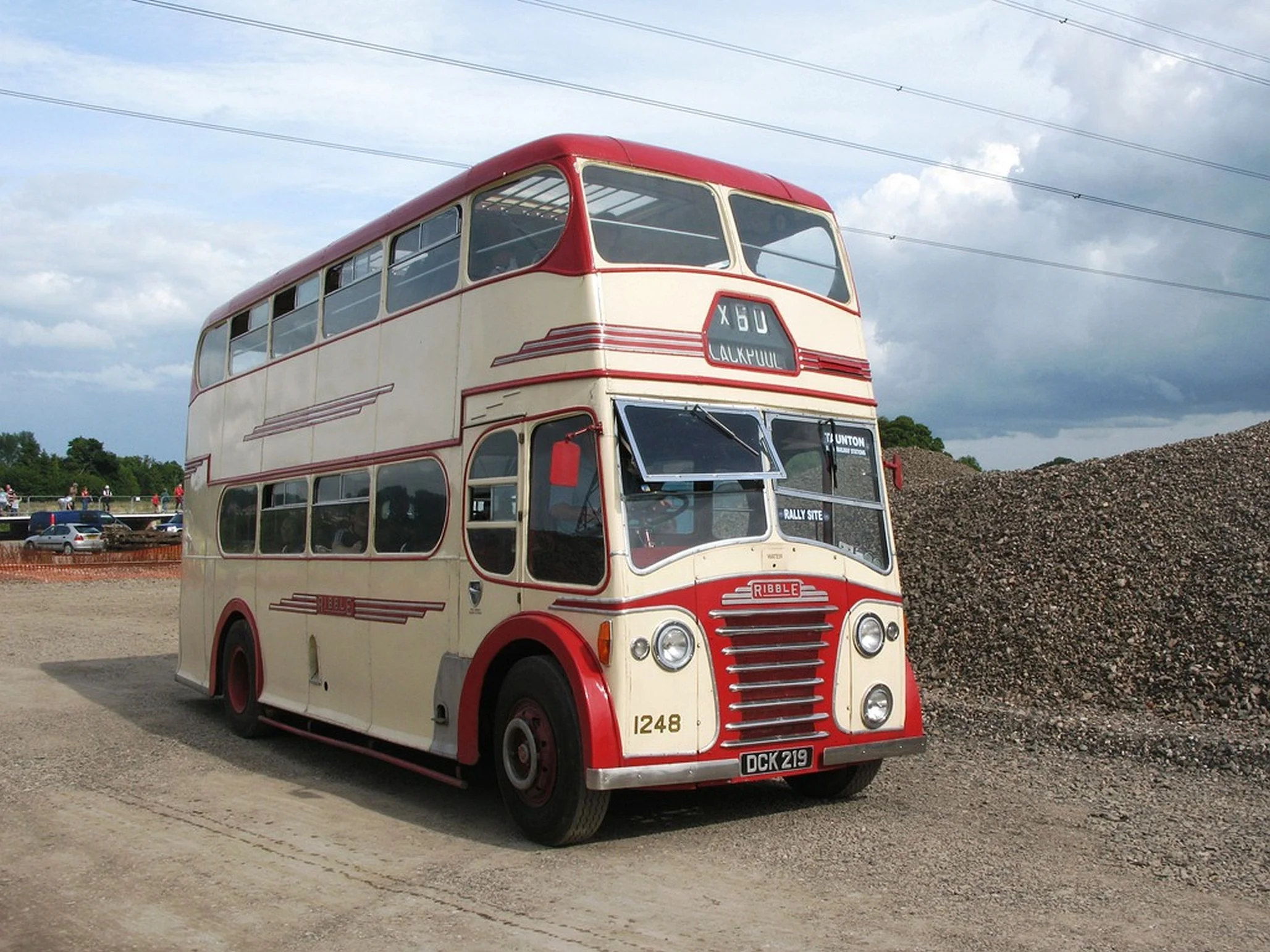
Preserved Leyland Titan DCK219 has distinctive full-front lowbridge bodywork by East lancashire Coachbuilders. It was number 1248 in the Ribble fleet and is seen leaving the Norton Fitzwarren Steam Fayre in 2009.Geof Sheppard, CC BY-SA 4.0, via Wikimedia Commons
Click image to enlarge
.webp)
1960 #
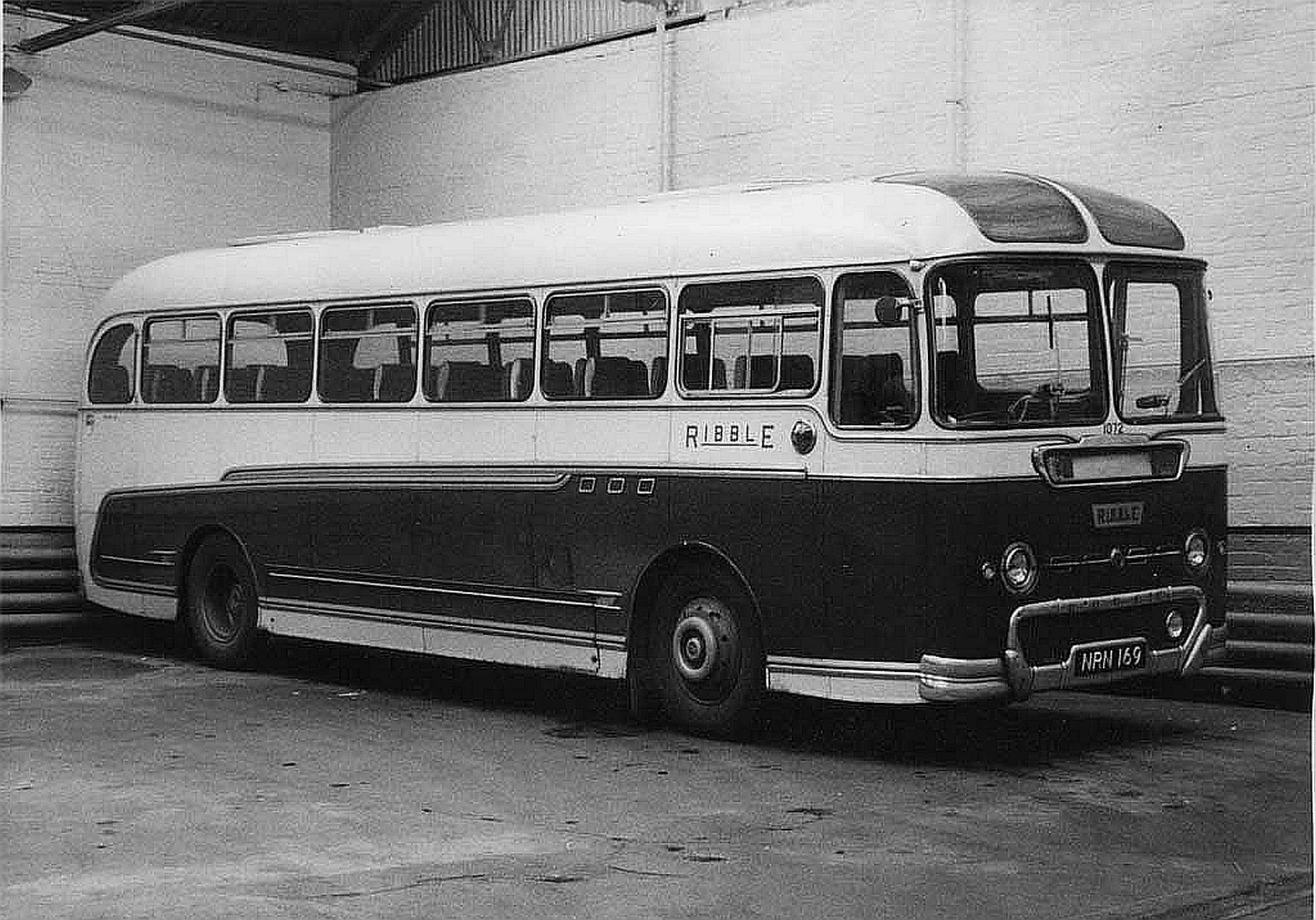
Ribble coach 1072 (reg. NRN 169), a 1960 Leyland Leopard PSUC1/2 with Duple (Midland) Donnington bodywork: bilbobagweed, CC BY 2.0, via Wikimedia Commons
Click image to enlarge
.webp)
1961 #
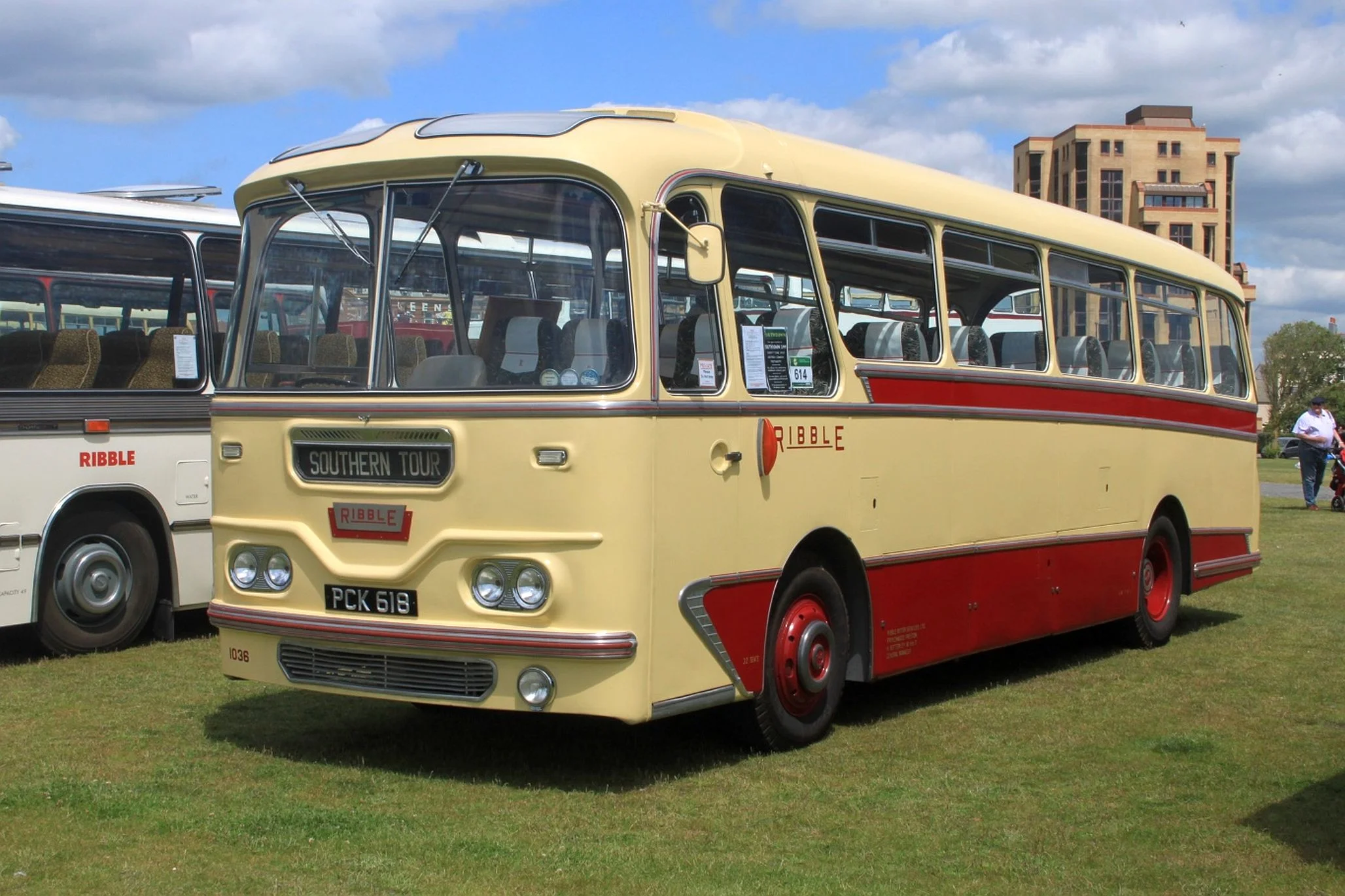
A preserved Harrington Cavalier coach (regsitration PCK618; number 1036 in the Ribble fleet) at the Southdown centenary rally in Southsea. Geof Sheppard, CC BY-SA 4.0, via Wikimedia Commons
Click image to enlarge
.webp)
1962 #
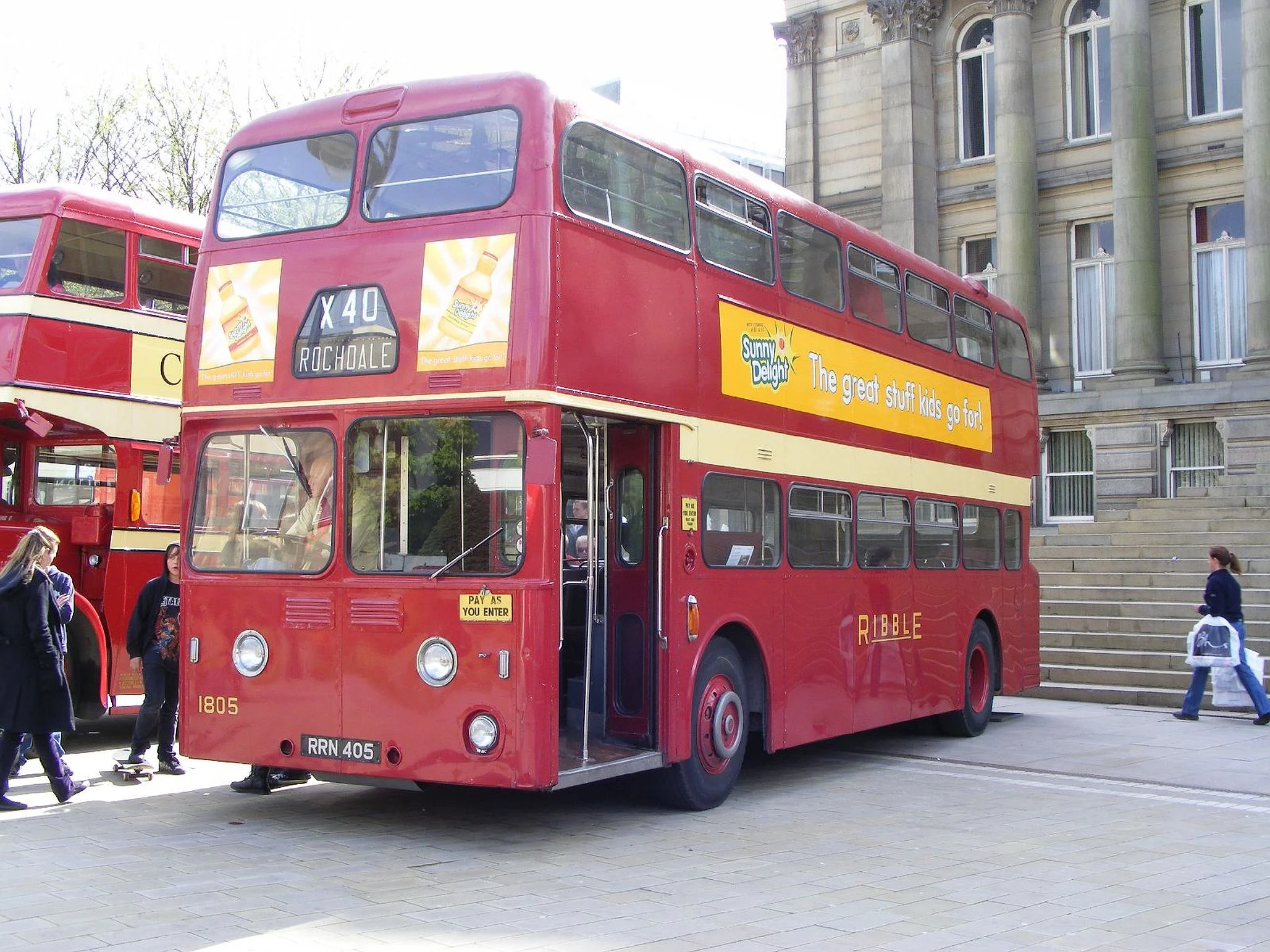
Ribble bus 1805 (RRN 405), Bolton Victoria Square bus rally, 2 May 2009: Pimlico Badger, CC BY-SA 2.0, via Wikimedia Commons
Click image to enlarge
,_Bolton_Victoria_Square_bus_rally,_2_May_2009_(2).webp)
1962 #
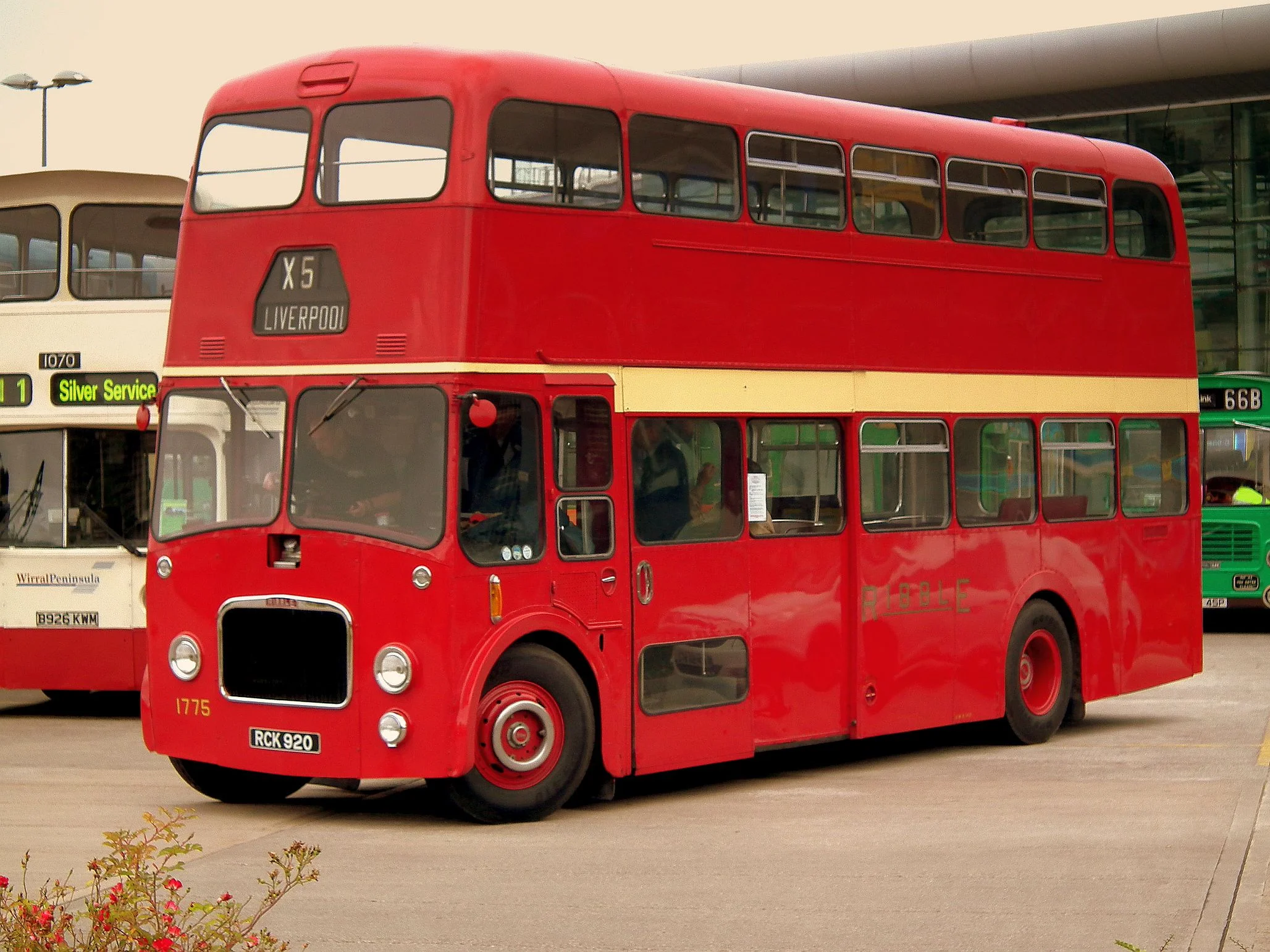
Ribble Motor Services Leyland PD3 MTT Running Day Liverpool South Parkway Sep 2011: calflier001, CC BY-SA 2.0, via Wikimedia Commons
Click image to enlarge
,_2011_Merseyside_Transport_Trust_running_day_(1).webp)
1981 #
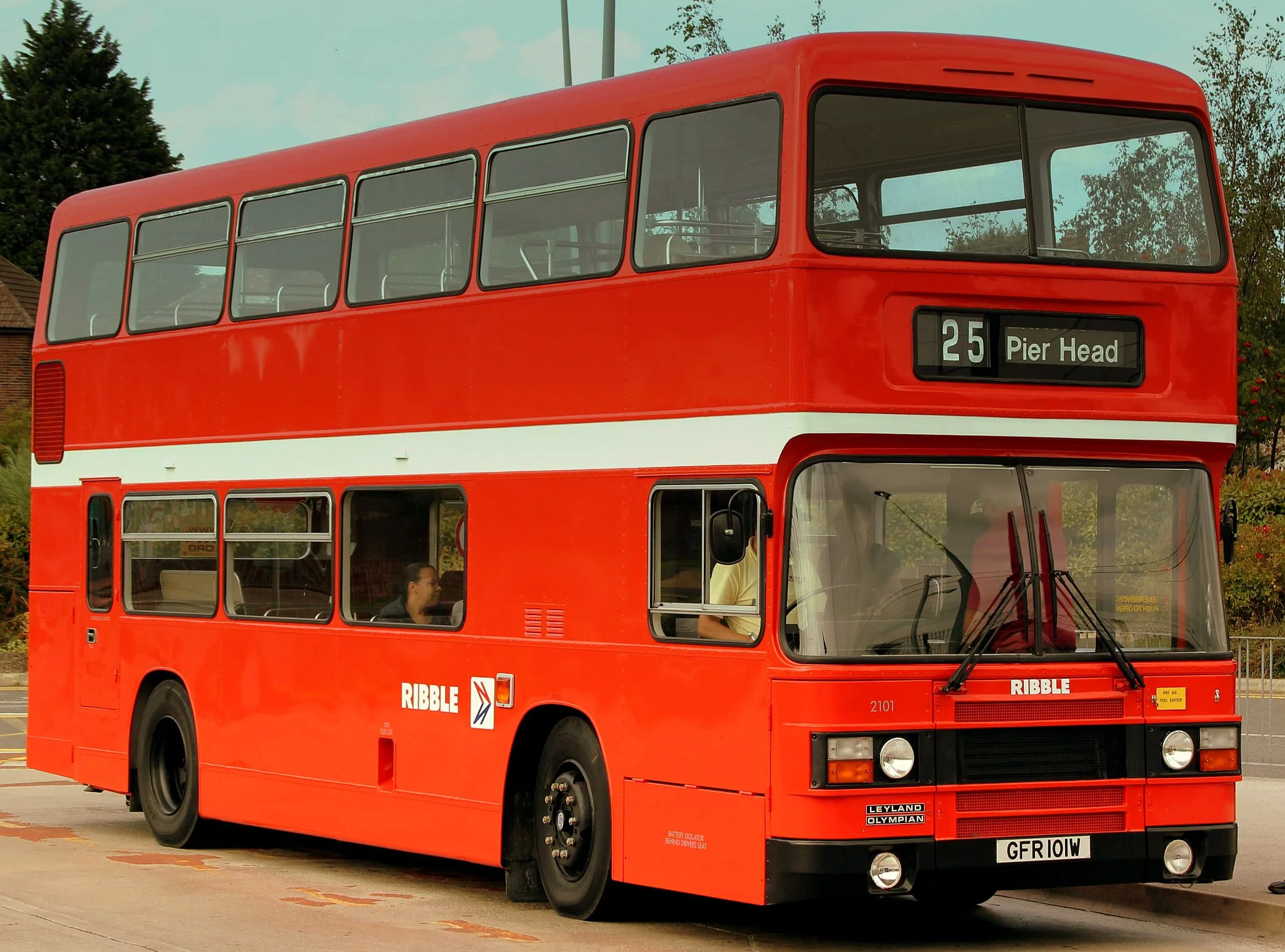
calflier001, CC BY-SA 2.0, via Wikimedia Commons
Click image to enlarge
.webp)
- Registration: GFR 101W
- Year new: 1981
- Fleet Number: 2101
- Chassis: Leyland Olympian prototype
- Body: ECW (Eastern Coach Works) double-decker
- Operator: Ribble Motor Services
Delivered new to Ribble Motor Services in 1981, this bus was one of the very first Leyland Olympians, a design born from the merger of Bristol Commercial Vehicles and Leyland. Officially registered as a Bristol for type-approval reasons, it carried the full Leyland badging and introduced the Olympian layout that went on to dominate double-decker production through the 1980s and 1990s.