The Cheddar Charabanc
Postcard From The Past: A Day Out in Somerset on a Charabanc #
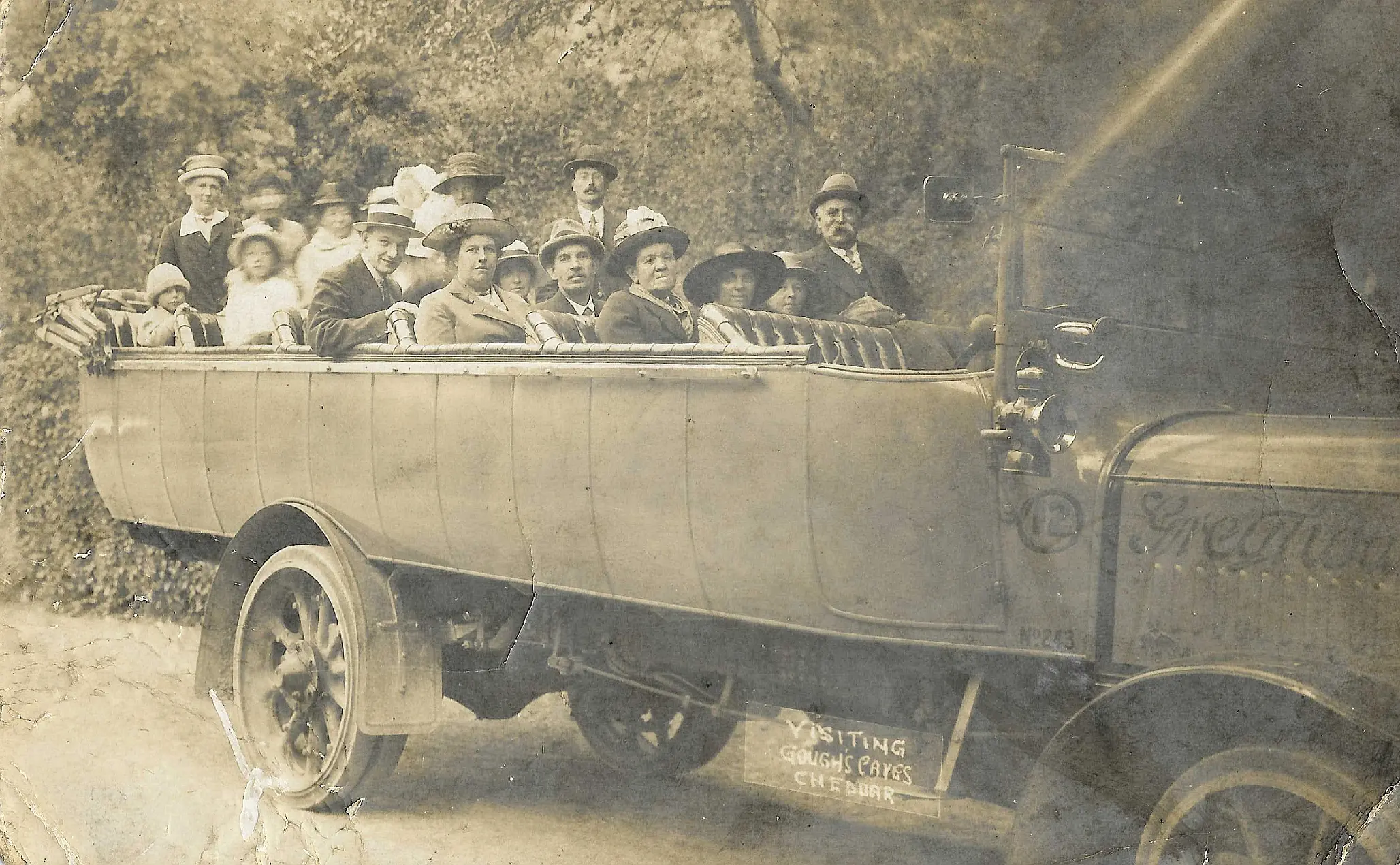
1920s charabanc excursion to Gough’s Caves, Cheddar. Real photo postcard in the Vintage Buses Collection. - Click image to enlarge
I was looking through a rather disappointing batch of postcards I purchased recently, then I came across this little gem.
An early 1920s open top charabanc is packed with holidaymakers and they’re all dressed up in their Sunday best. At the rear, the heavy canvas hood sits neatly folded away, ready for the inevitable British downpour.
Solid rubber tyres and wooden spoked artillery wheels carry the heavy chassis, making me wonder what the ride would be like. Can you imagine riding a vehicle these days that has solid tyres and wooden spokes running along our potholed roads?
What makes this photograph particularly interesting is the detail captured right on the vehicle:
- The Destination Sign: Hand-painted or chalked onto the running board is the inscription VISITING GOUGH’S CAVES CHEDDAR, pin pointing the party’s excursion through Somerset’s famous gorge.
- The Proprietor Markings: The shiny script on the bonnet reveals the operator Greene’s, with fleet number Number 243 neatly painted just below the scuttle.
Local tour photographers frequently waited at popular tourist hubs like Cheddar Gorge to photograph arriving excursion coaches. By the time the passengers finished exploring the caves, finished their tea, or picked up souvenir rock, the postcard prints were already on display for the tourists to buy and take home.
Back of Postcard #
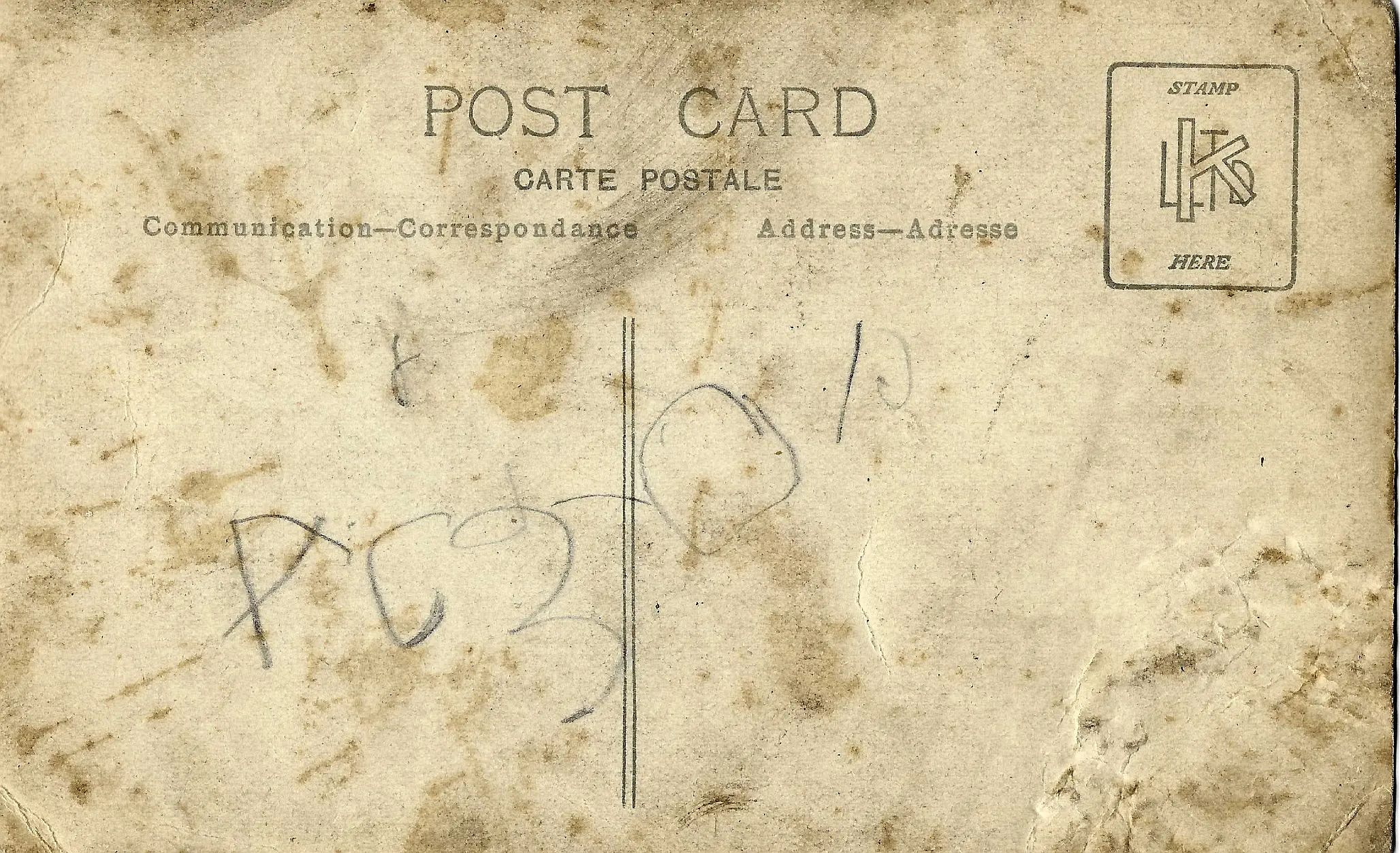
1920s charabanc. Reverse side of postcard. Real photo postcard in the Vintage Buses Collection. - Click image to enlarge
- Publisher Stamp: The publisher logo in the stamp box shows W&K inside a shield/banner design. This is the logo of Wildt & Kray, a well known London based postcard publisher active in the early 20th century.
- Postcard Layout: The bilingual divider line Communication—Correspondance / Address—Adresse, confirms standard British production from the 1900s to 1920s.