Alexander's Bluebird Coaches
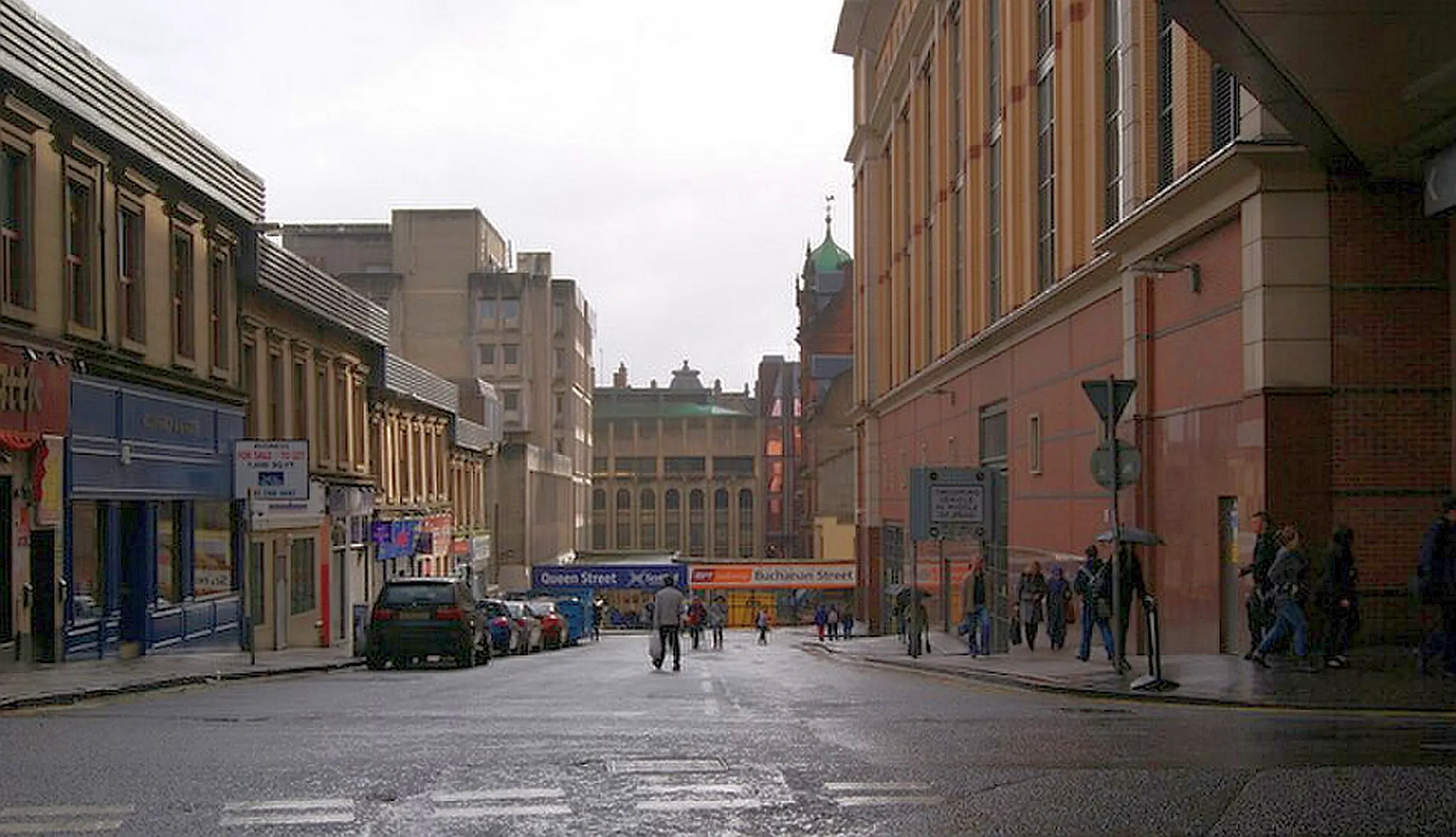
In the 1960s, Bluebird coaches lined up in Dundas Street on a Sunday morning:
Thomas Nugent / Dundas Street (2010)
Click image to enlarge
The Sunday Mystery Tour #
In the early part of the 1960s When I was a lad, we used to get up early and head for Glasgow city centre. We made our way to Queen Street railway station and turned into Dundas Street. Waiting for us there were three or four cream and blue coloured Bluebird coaches, run by W Alexander & Sons.
Sometimes we’d try the Mystery Tour, knowing full well we’d eventually end up in Callander anyway with the other coaches. There used to be very strict statutory controls regarding trading hours for retail shops in Scotland and most shops were closed on Sundays. Callander had a few hotels and were exempt from closing, holding special hotel exemption certificates.
Scotland is renowned for its unpredictable weather and although it may have been the middle of July, it did not stop the rain from spoiling your day - and it often did. I remember spending a lot of time sitting on the coach, not being able to venture out to visit the beauty spots.
As for the adults, if rain stopped them seeing the beauty of Callander and they were still in the hotel, then as bona fide travellers, they were legally entitled to purchase alcoholic drinks. Visitors to the hotels had to sign the hotel’s Traveler Register, stating that they had travelled at least a distance of three miles to reach the hotel.
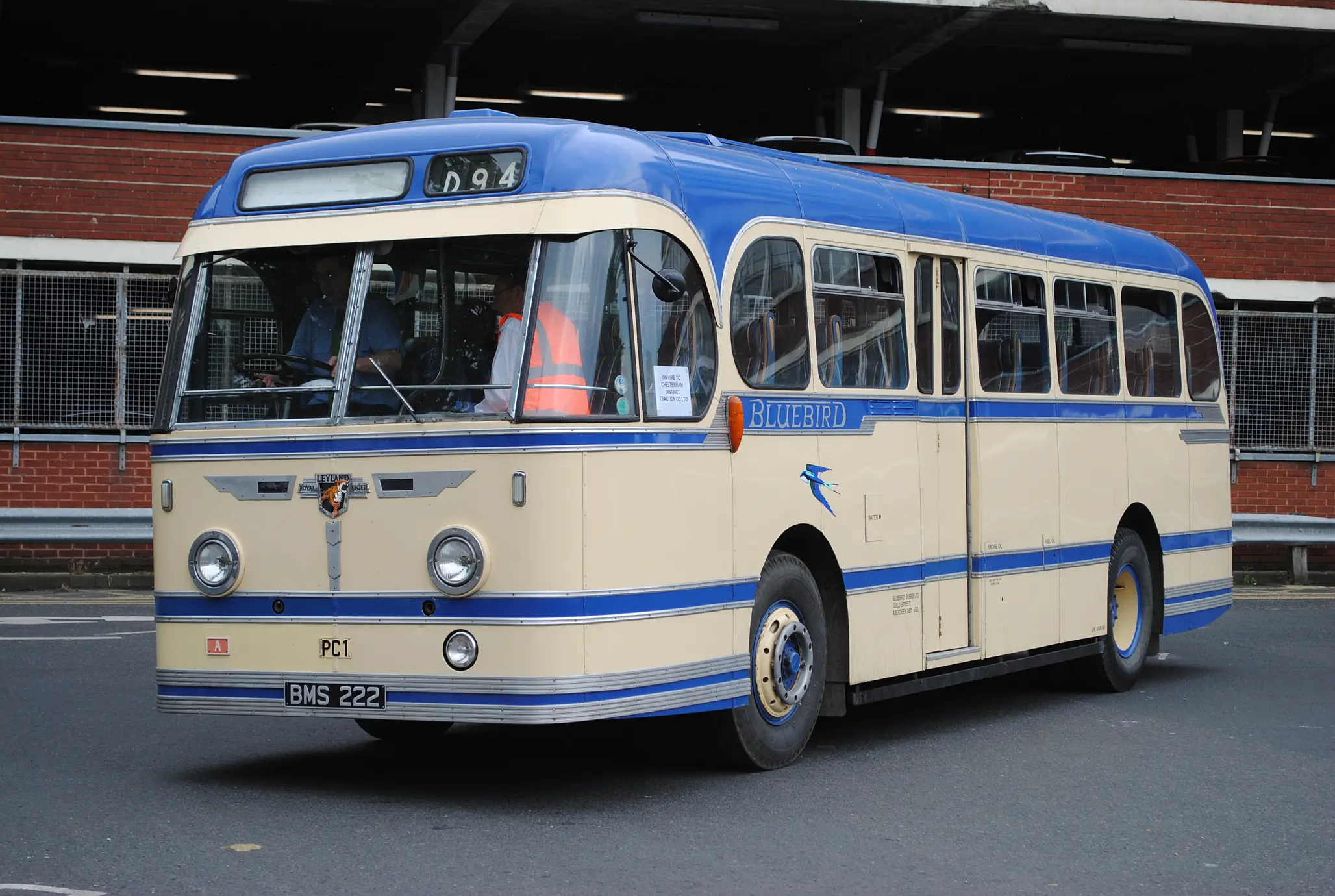
Leyland Tiger PSU1/15 (1952): Secret Coach Park, CC BY-SA 2.0, via Wikimedia Commons
Click image to enlarge

Bluebird History #
- 1924: Walter Alexander, starting from humble beginnings with a cycle shop and carter business in Falkirk, rapidly expanded his motor bus service, adopting a distinctive blue livery that passengers quickly nicknamed Bluebird.
- 1929: The Scottish Motor Traction (SMT) group acquired a major financial interest in W. Alexander & Sons, tying the company into a massive network backed jointly by railway companies, while allowing the Bluebird identity to expand across central and northern Scotland.
- 1930s to the 1940s: Alexanders established a massive in-house body-building subsidiary (Alexander’s of Falkirk), ensuring that the fleet had a distinctively local Scottish style.
- 1950s to the 1960s: At their peak, the Bluebird fleets dominated routes ranging from local town services to long distance country runs. This era created the packed weekend and Sunday excursion runs.
- 1961: Due to massive post-war growth, W. Alexander & Sons was officially split into three separate regional operating companies: Alexander (Midland), Alexander (Northern), and Alexander (Fife).
- 1969: State takeover occurred when the Scottish Transport Group (STG) took ownership of the Alexander companies under government control, maintaining the blue heritage colors and regional service patterns.
- 1985 to 1991: In anticipation of bus deregulation, the state-owned Scottish Bus Group broke up its subsidiaries. The northern operations were repackaged as Northern Scottish, which was soon sold off to the Stagecoach Group in 1991 and officially rebranded back to Stagecoach Bluebird. Meanwhile, the central region became Midland Bluebird.
- Present Day: The Bluebird legacy survives through Stagecoach Bluebird operating extensively across Aberdeen, Aberdeenshire, and Moray, alongside preserved vehicles lovingly kept alive by enthusiasts at groups like the Glasgow Vintage Vehicle Trust and the Scottish Vintage Bus Museum in Lathalmond, Fife.
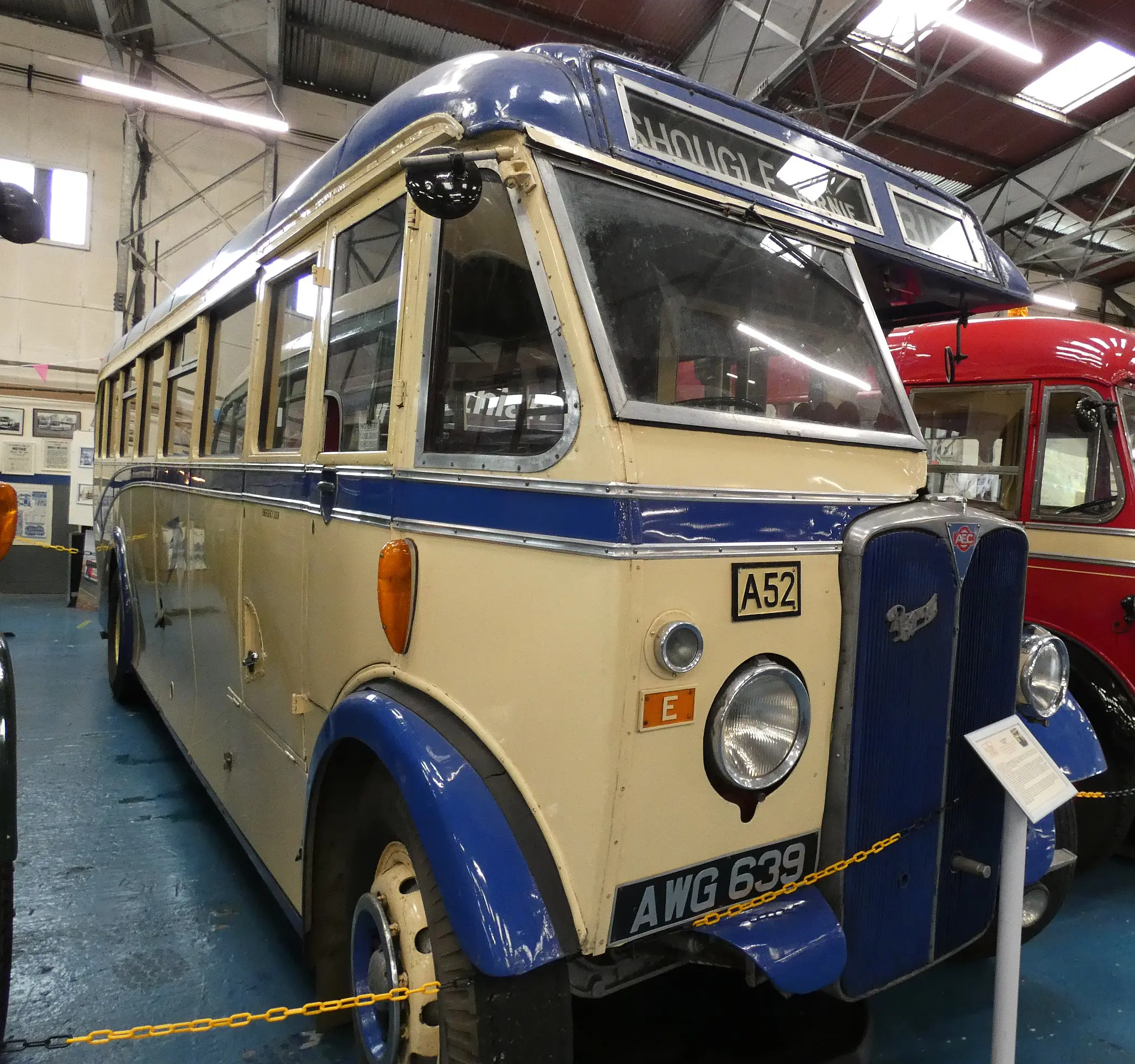
 AEC Regal Mk I 0662 (1946): Scottish Vintage Bus Museum, Lathalmond Fife (August 2025)
Click image to enlarge
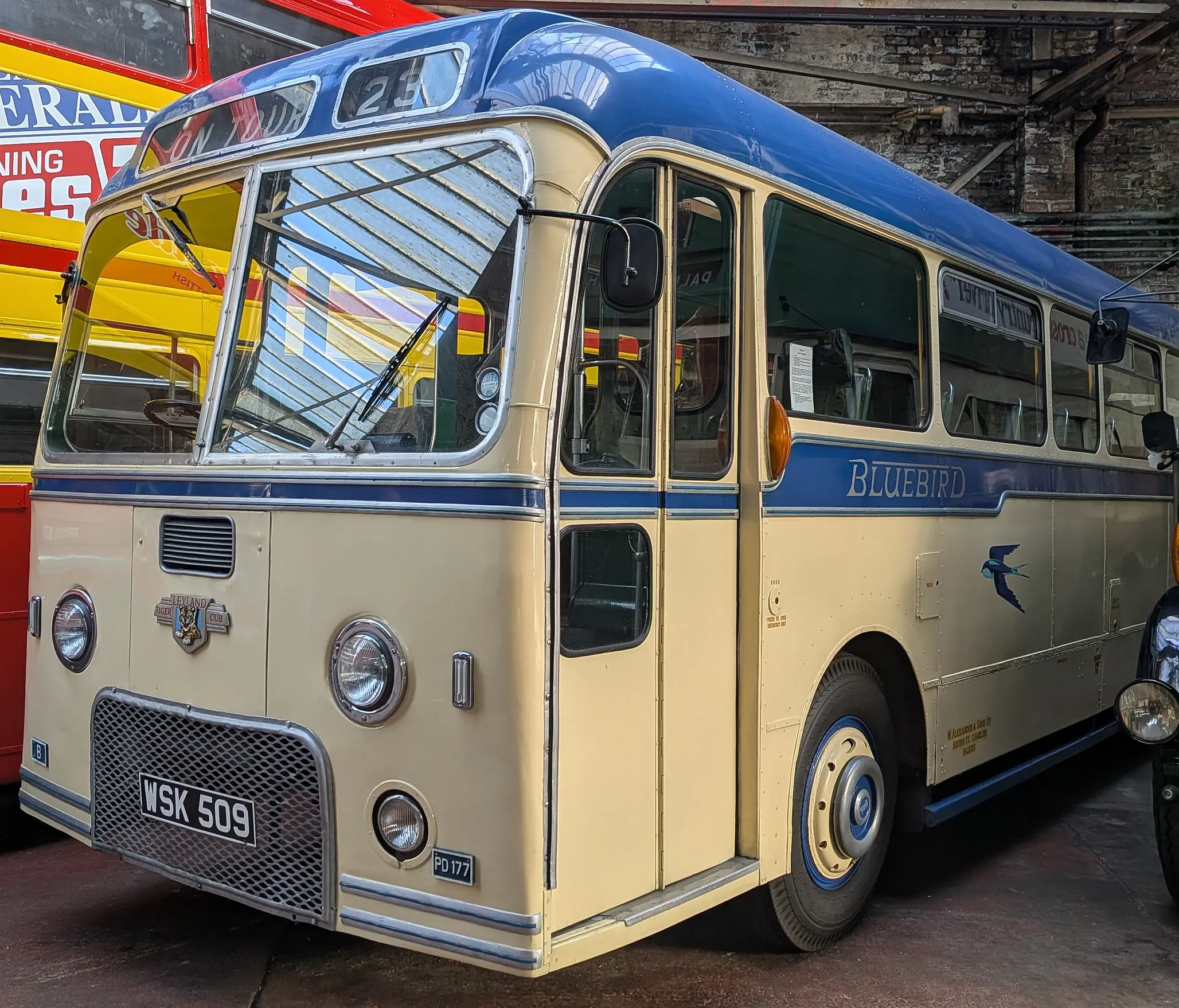
Leyland Tiger Cub PSUC1/2 (1960): GVVT Bridgeton Bus Garage Glasgow (July 2026)
Click image to enlarge
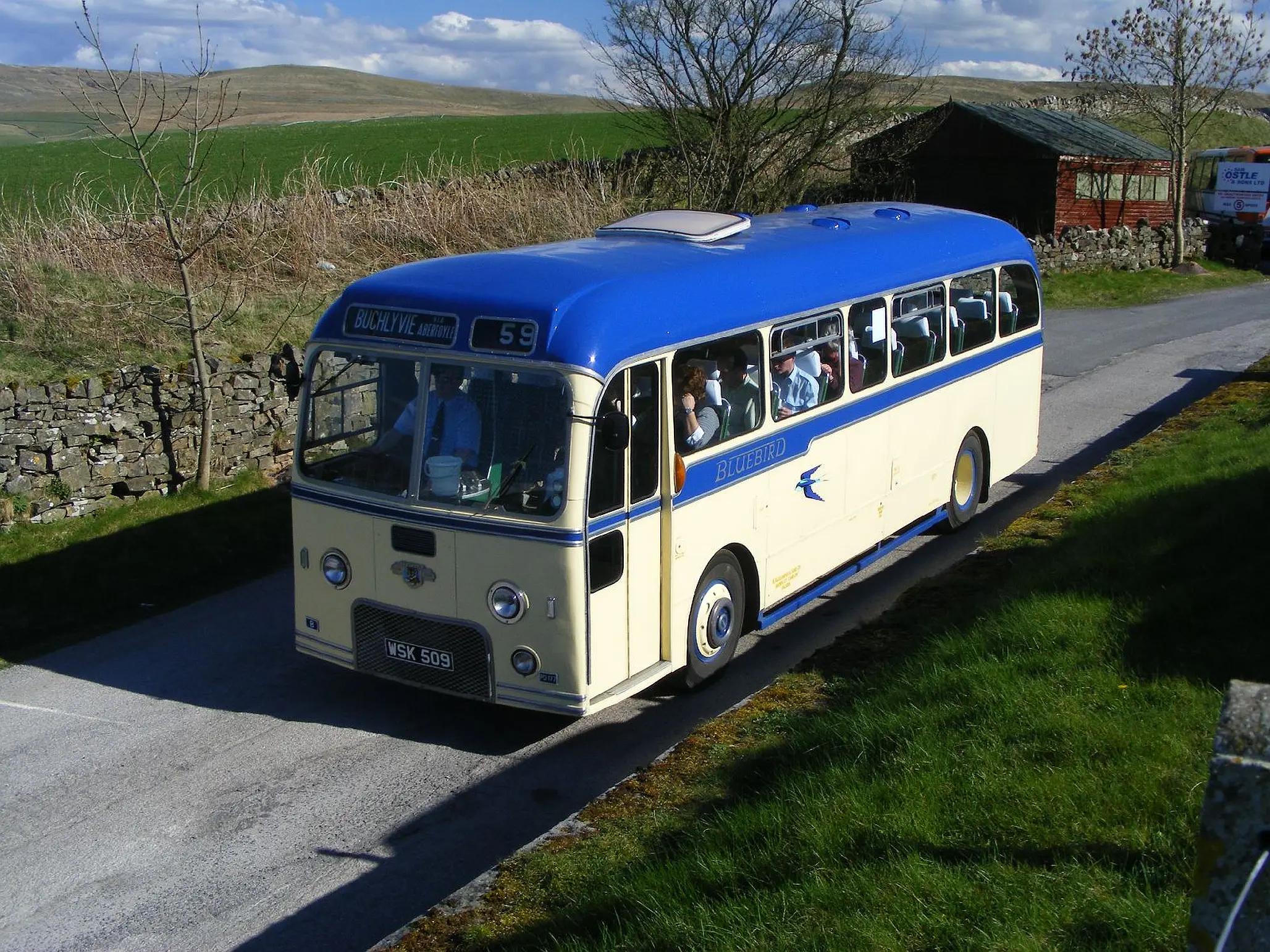
Leyland Tiger Cub PSUC1/2 (1960): Pimlico Badger, CC BY-SA 2.0, via Wikimedia Commons
Click image to enlarge

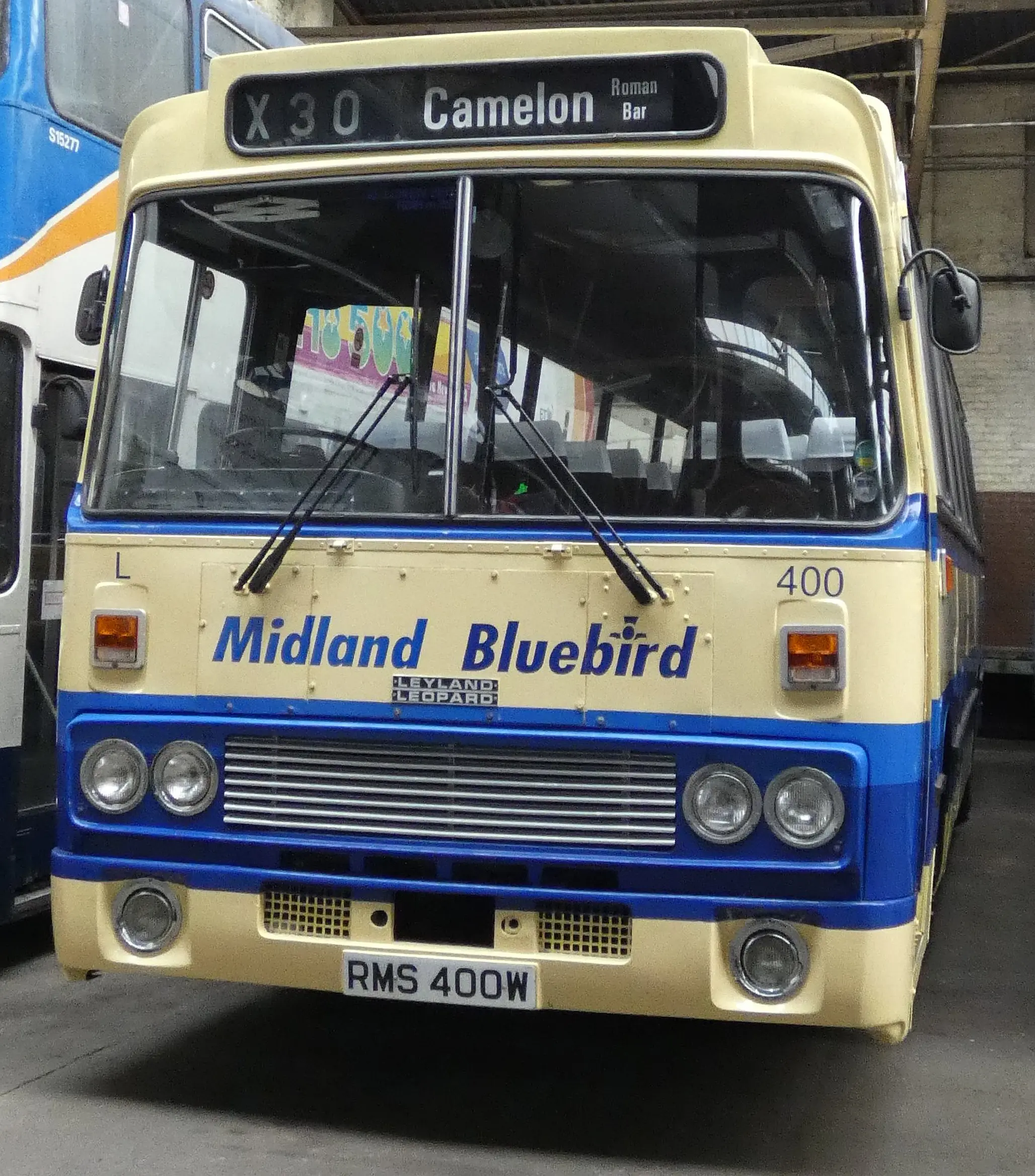
Leyland Leopard PSU3G/4R (1981): GVVT Bridgeton Bus Garage Glasgow (November 2024)
Click image to enlarge
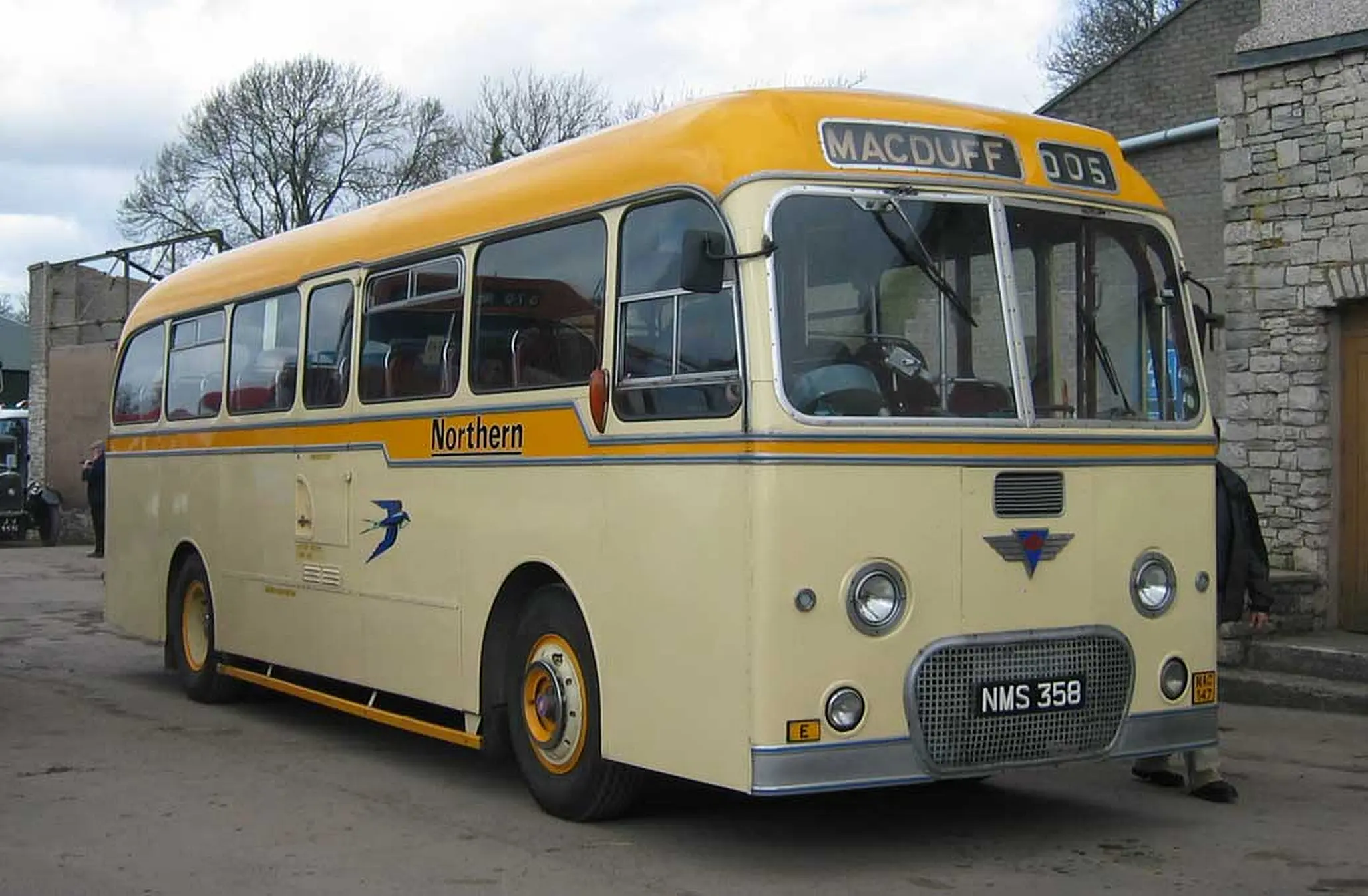
AEC Reliance 2MU3RV (1960): bilbobagweed, CC BY 2.0, via Wikimedia Commons
Click image to enlarge

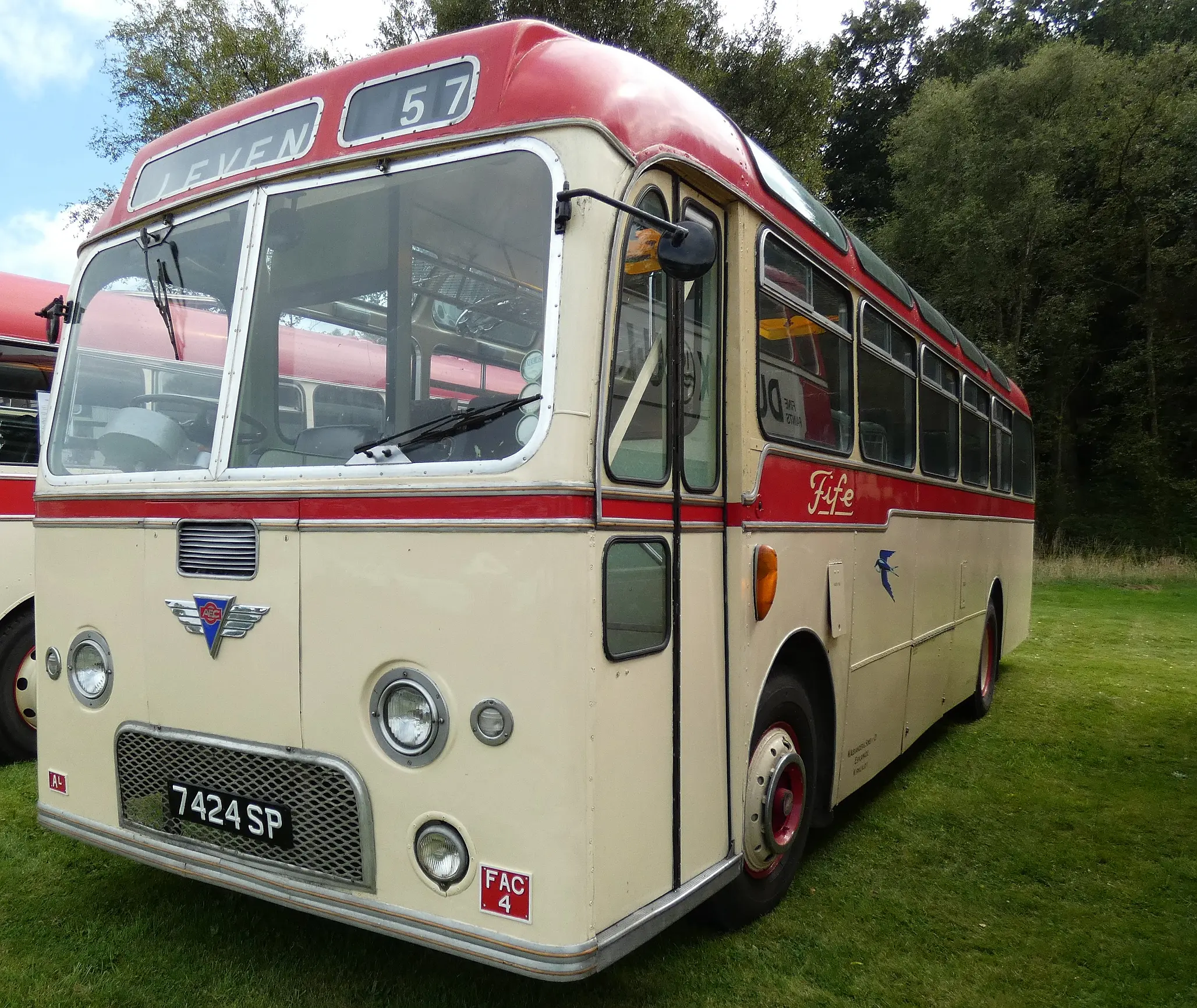
AEC Reliance 2MU3RV (1962): Scottish Vintage Bus Museum, Lathalmond Fife (August 2025)
Click image to enlarge